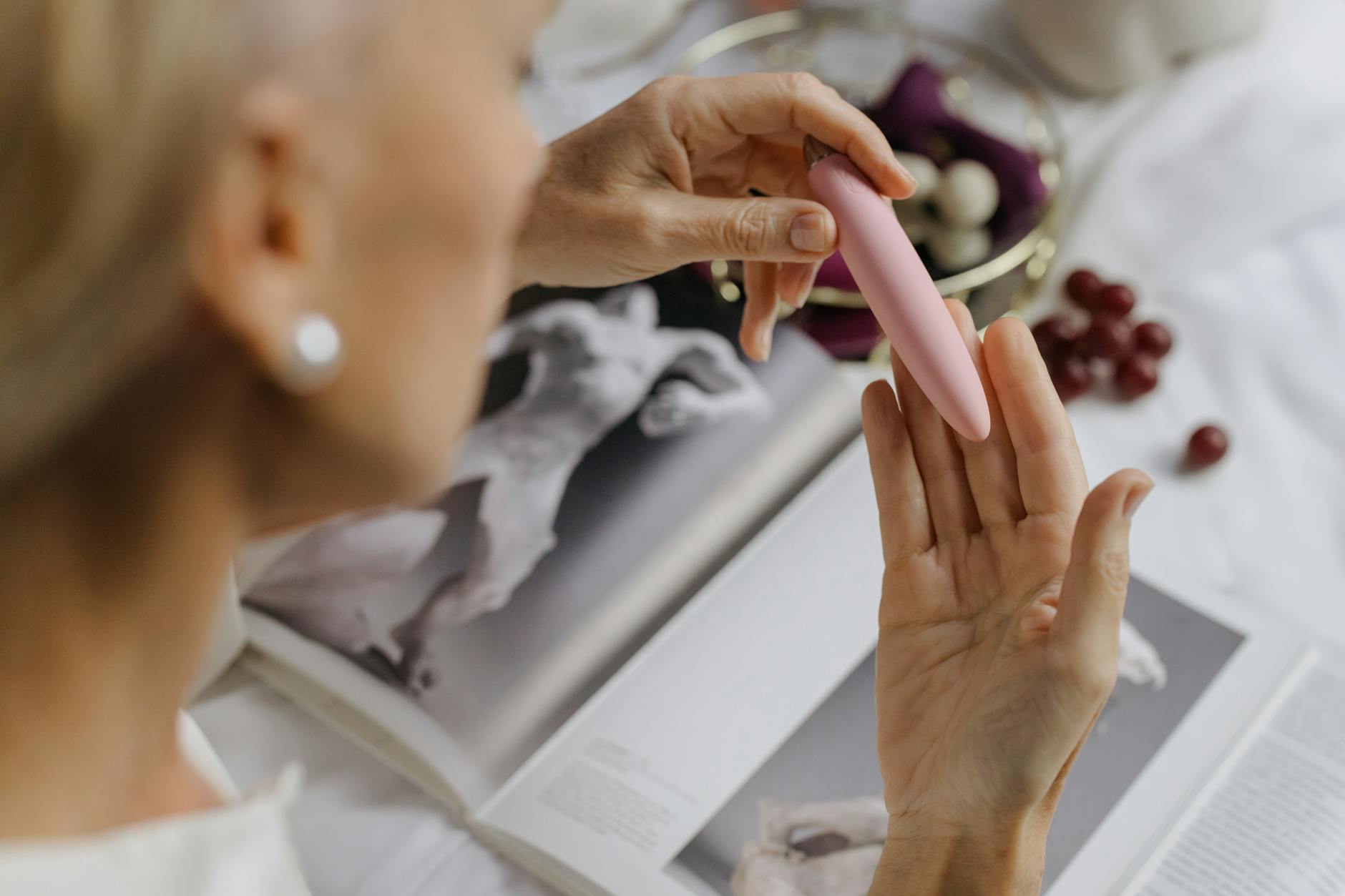
Let's be real. Your pleasure doesn't stay constant from week to week. Arousal feels faster some days, slower on others. Sensitivity shifts. What felt amazing last week feels mediocre now. Most people chalk this up to mood or stress, but the real driver is hormonal. Your menstrual cycle doesn't just affect your period. It rewires your entire sensory experience.
This is where cycle syncing comes in. Not in a mystical way, but in a biological one. Understanding how your hormones change across your cycle means you can use your lemon vibrator more effectively. You're not fighting against your body anymore. You're working with it.
The follicular phase runs from day 1 of your period through ovulation (roughly day 14, though it varies). Estrogen is rising. Your baseline arousal is higher. Blood flow to your genitals increases. Sensitivity builds steadily across this window.
This is when lemon vibrators and clitoral vibrators in general hit their stride.
Here's what changes physically: your clitoris is more engorged, tissues are thicker and more resilient, and your nervous system is primed for stimulation. The suction action of a lemon vibrator during this phase tends to feel incredible because there's more blood flow supporting sensation. You might orgasm faster. You might want more intensity than usual. That's not random. That's biology.
What this means for your technique: start at a higher intensity pattern than you might during other phases. Your tissues can handle it. If you usually begin at pattern 2 or 3 on the Lem vibrator, try jumping to 4 or 5. You'll likely find the sensation builds faster and feels more direct. Warm-up time shrinks. Where you might spend 15 minutes building arousal in other phases, you might only need 8 or 10 here.
Ovulation is a window, not a single day. It typically happens around day 14, give or take a few days depending on your cycle length. For 24 to 48 hours around ovulation, your estrogen peaks. Your testosterone also spikes.
This is when sensitivity is at its highest. Your clitoris is maximally engorged. Orgasms tend to be the most intense and sometimes multiple. It's the phase where people often report their best experiences with lemon vibrators because the tissues are primed and the nerve response is sharpest.
During ovulation, you might find you need less stimulation time to reach orgasm. You might also notice the sensation feels sharper, almost more acute. Some people find this incredible. Some find it overwhelming. Both are normal. If you're in the ovulation window and the usual intensity feels intense, you have options: drop one pattern level, increase the distance between the vibrator and your body, or take more breaks between sessions.
After ovulation, you enter the luteal phase. This is the longest phase, roughly day 15 through day 28. Progesterone rises. Estrogen drops. Testosterone is lower. Your body shifts gears entirely.
Sensation here feels different. Not worse, but different. Blood flow is less concentrated in your genitals. Arousal typically takes longer to build. Your baseline sensitivity is lower. You might feel less interested in sex altogether, and that's completely normal. Progesterone is a calming hormone. It works against dopamine and the neural pathways that drive sexual urgency.
For lemon vibrators and other clitoral vibrators, this is when you shift your strategy. Warm-up time increases. Where the follicular phase might only need 10 minutes, the luteal phase might need 20 or 25. Start at a lower intensity pattern and build up more slowly. Pattern 1 or 2 is often a better starting point. Advance gradually as you feel arousal build, rather than jumping straight to high intensity.
That said, many people report deeper, more full-body orgasms during the luteal phase because they're not chasing the sharp peaks of estrogen. The sensation spreads more. If you're patient with the warm-up, the payoff can be excellent.
Your period itself is a tricky window. Menstruation typically lasts 3 to 7 days. Hormone levels are bottoming out. You might feel less interested in pleasure. You might also feel a legitimate need for it because orgasms can ease cramping and release tension.
Here's the physiology: during menstruation, your pelvic floor is often more tense due to cramping. Your tissues are more sensitive to pressure. Blood flow is redirected. Your nervous system is in more of a sympathetic state (fight or flight) rather than parasympathetic (rest and digest).
Using a lemon vibrator during your period works, but approach it differently. Keep intensity low, starting at pattern 1 and increasing only if it feels good. Your body might need gentler stimulation. Lubrication matters more during your period because menstrual flow isn't the same as arousal lubrication. A bit of water-based lube helps. Some people find that orgasms ease their cramps. Others find that stimulation feels uncomfortable during bleeding. Both are valid.
The key: listen to your body. Your period isn't a rest day from pleasure unless you want it to be. But it's also not the phase to test your limits with intensity.
Here's something almost nobody talks about: your cervix moves throughout your cycle. In the follicular phase and during ovulation, your cervix is higher and more open. In the luteal phase, it drops and closes slightly. This changes what kinds of stimulation feel good.
During the follicular phase, more direct, intense stimulation to the entire vulva often feels amazing because there's more space. During the luteal phase, you might prefer gentler, broader stimulation because your cervix is lower and more intense pressure can feel uncomfortable. Neither approach is wrong. The phase matters.
With lemon vibrators specifically, the suction action bypasses some of this because you're stimulating the clitoris, not the vagina. But the overall sensation of intensity still matters. Heavier pressure days are your follicular phase and ovulation. Lighter pressure days are your luteal phase and menstruation.
Your natural lubrication also shifts dramatically. In the follicular phase and around ovulation, your body produces more lubrication that's thinner and more slippery. During the luteal phase, lubrication decreases and becomes thicker. During menstruation, you're working with menstrual flow, not arousal lubrication.
What this means practically: you might need external lubricant during the luteal phase and menstruation but not during the follicular phase. Water-based lube works with any toy, including lemon vibrators. The Lem vibrator works well even without additional lube due to the suction action, but some people find adding lube enhances sensation or makes the experience feel smoother. Experiment during different phases and see what your body prefers.
Follicular phase (days 1-13). Start at higher intensity patterns. Keep warm-up time shorter. Your body is primed. Orgasms come faster and often feel more acute. This is the phase to explore new patterns or higher settings if you're curious.
Ovulation (roughly day 14). Expect the most intense sensation. If it feels overwhelming, lower the intensity. Sensitivity peaks. Orgasms often stack. This is the phase where you might achieve multiple orgasms more easily.
Luteal phase (days 15-28). Slow down. Start lower, build gradually. This phase teaches patience. The trade-off is often deeper, more diffuse sensation. If arousal feels low, that's hormonal, not a sign something's wrong.
Menstruation (days 1-7, roughly). Low to medium intensity. Your comfort and pain relief matter more than intensity. If cramping eases with orgasm, that's a win. If stimulation feels uncomfortable, skip it without guilt.
Your cycle will vary. Stress, travel, illness, and major life changes all shift your cycle slightly. That's normal. But if you notice dramatic, persistent changes in your baseline arousal or sensation, it's worth checking in with your doctor.
Things to mention: significant lengthening or shortening of your cycle, sudden loss of arousal that doesn't return, pain where there wasn't pain before, or sensation that feels numbed in a way that doesn't match your usual cycle pattern. Birth control changes can shift things too. So can thyroid issues, medication changes, or nutritional deficiencies. Your pleasure is tied to your overall health. Paying attention to changes is actually really smart self-care.
Estrogen and progesterone change how much blood flows to your genitals and how your nervous system processes sensation. During the follicular phase and ovulation, blood flow and sensitivity are higher. During the luteal phase, they decrease. Same vibrator, same settings, completely different sensation. It's not you. It's your hormones doing their job.
Absolutely. Irregular cycles are common and often totally fine. You might not see as clear a pattern across your month, but you'll likely still notice some phases where arousal builds faster and others where it takes longer. Pay attention to those patterns rather than trying to fit a textbook 28-day cycle. Your body isn't following a calendar.
It's not placebo. The physiology is real. Blood flow, tissue thickness, hormone levels, and nervous system state all change across your cycle. Whether you consciously sync your toy use to those changes or not, your body is already experiencing them. Syncing just means you're working with your body instead of being surprised by it.
There are a few possibilities. Stress, sleep deprivation, and certain medications can suppress arousal across your entire cycle, not just certain phases. Birth control, especially hormonal methods, can lower baseline desire. Nutritional deficiencies, anemia, or thyroid issues can too. If low arousal is new for you or persistent, it's worth talking to your doctor. Pleasure matters, and sometimes your body's telling you something else needs attention.
Daily use is fine if it feels good. Your cycle changes what feels best, but it doesn't make daily use harmful. Some people prefer daily touch-bases with their body. Some prefer using their vibrator weekly or a few times a month. Neither is better. The cycle matters for tuning your experience, not for restricting how often you use your lemon vibrator.
Orgasms are neurological events influenced by hormone levels, blood flow, and pelvic floor muscle tone. All three shift across your cycle. During the follicular phase, orgasms tend to be more centered, sharp, and quick. During the luteal phase, they're often more spread out, deeper, and take longer to build but sometimes feel more intense when they arrive. Neither is better. Your cycle just changes the flavor of the sensation.
Understood your cycle well enough to know when you're naturally more aroused and when you need more patience? That's not restricting your pleasure. That's maximizing it. A lemon vibrator is a tool that works with your body. Your cycle shows you exactly how to use it best.
If you're ready to explore how your body responds across different phases, start paying attention this month. Note which weeks arousal feels fast and which weeks it takes longer. Where you prefer higher intensity and where you want gentler stimulation. That information is gold. It tells you how to give yourself the best experience possible, every single week of your month.
Questions about how to use your lemon vibrator in ways that work with your body? Reach out. We're here to help you understand your pleasure better.