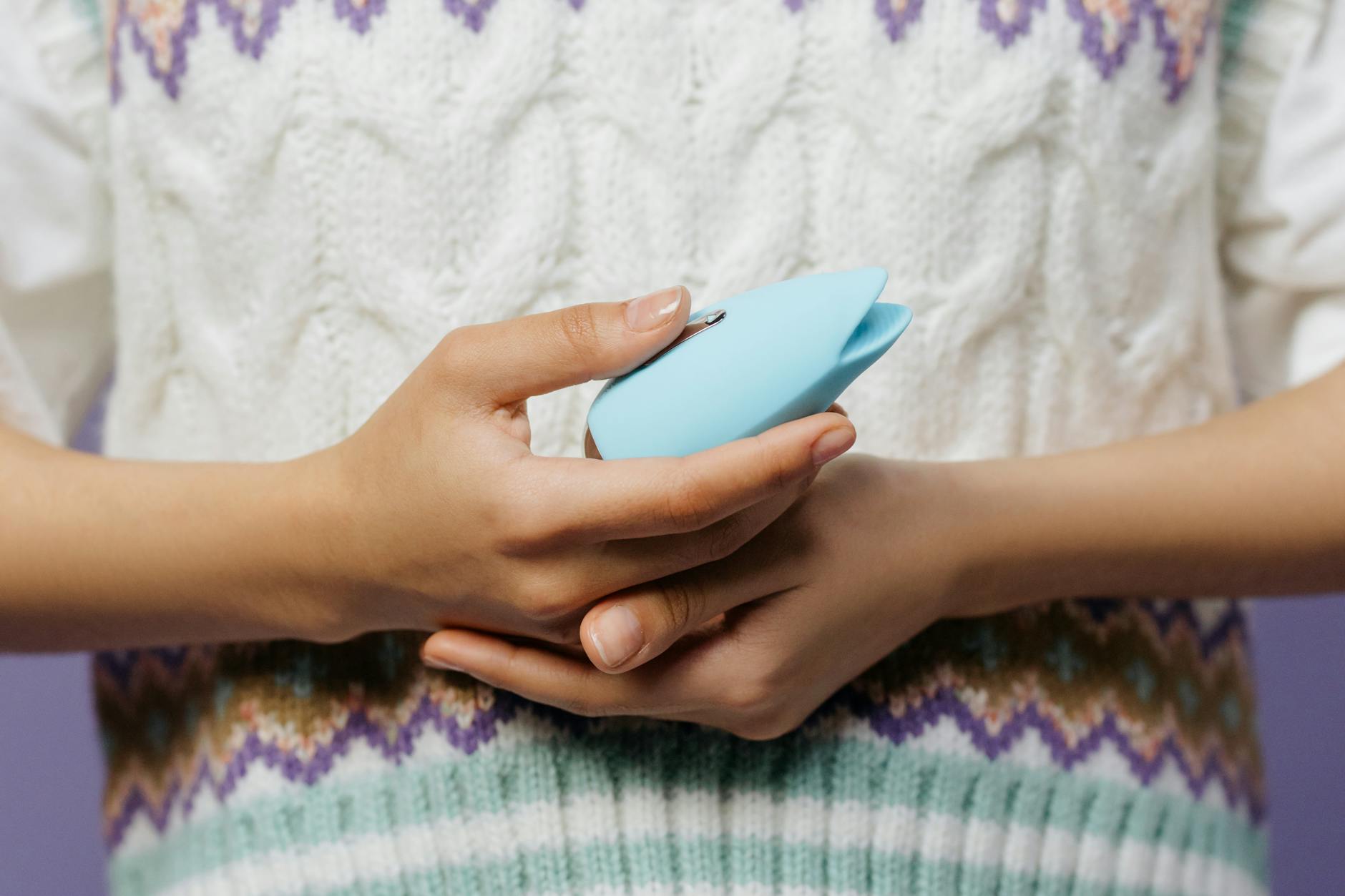
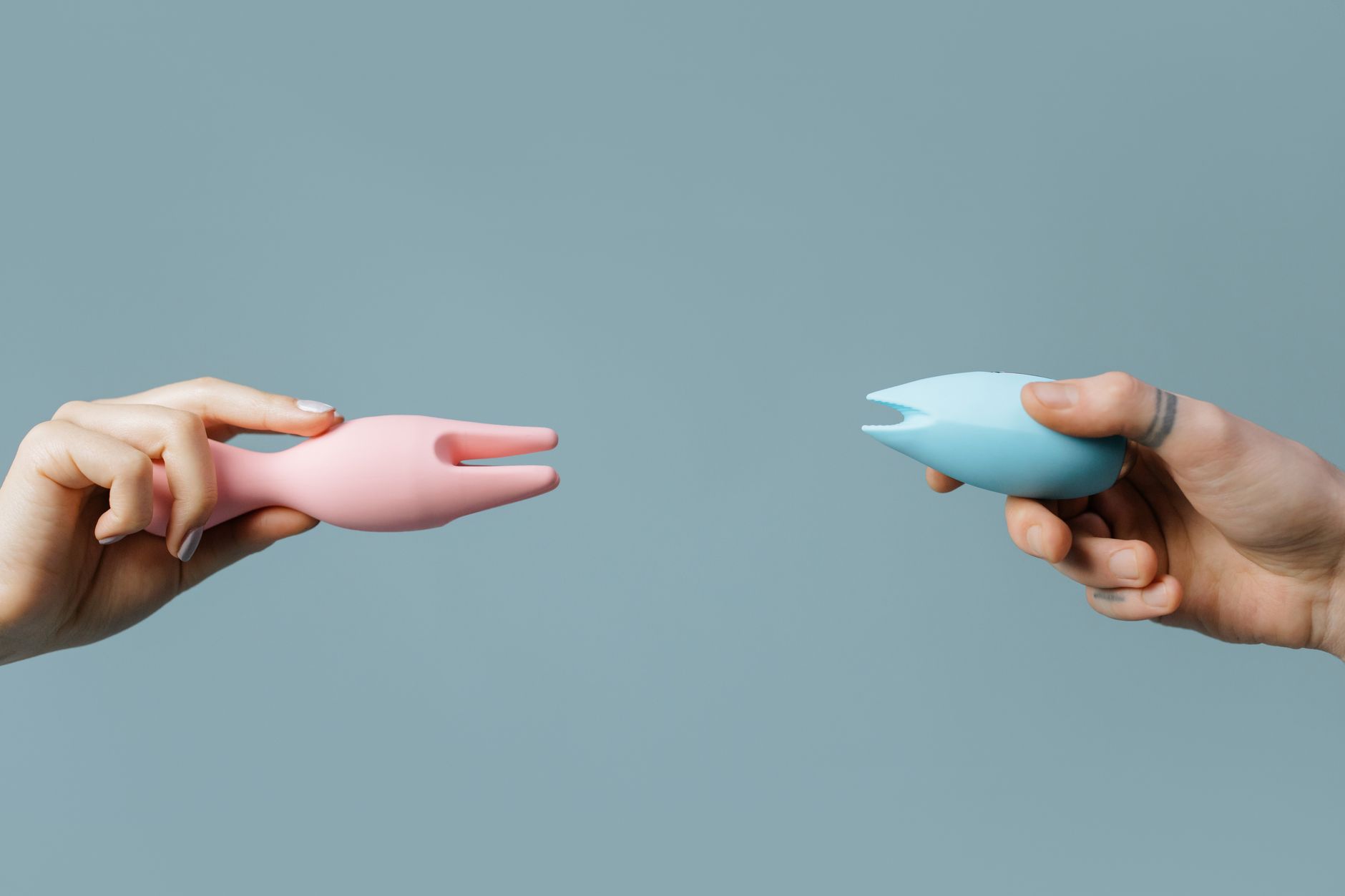
How to Use a Lemon Vibrator When Anxiety Affects Your Arousal
Your nervous system is on high alert. Your body won't cooperate. Here's why that happens and exactly how to recalibrate arousal when anxiety is in the way.
Anxiety doesn't just kill the mood. It hijacks your entire nervous system. When you're in fight-or-flight mode, blood flow redirects away from your genitals and toward your limbs, heart rate spikes, breath gets shallow, and your pelvic floor tightens. Your body is literally preparing to run from danger. Sex is the last thing it's built for.
The frustrating part: you want arousal. You know pleasure is possible. Your brain just won't let your body go there. That disconnect is exhausting, and it's also completely normal.
Here's what I've seen in my practice with dozens of clients navigating anxiety and desire: a lemon clitoral vibrator works differently than what most people expect. It's not about forcing arousal. It's about giving your nervous system permission to shift gears.
When you're anxious, your sympathetic nervous system (the accelerator) is flooring it. Arousal requires your parasympathetic nervous system (the brake) to take over. These two can't both be active at full throttle. Your body has to choose.
Anxiety also floods your system with cortisol and adrenaline. These hormones suppress sex hormones like dopamine and oxytocin. So even if you manage to get physically stimulated, the chemical foundation for pleasure isn't there.
Add performance pressure on top of that. Maybe you haven't had arousal in a while and you're worried it won't happen. Maybe your partner is waiting. Maybe you're frustrated with yourself. All of that worry becomes more anxiety, which deepens the block.
This is why willpower doesn't work. You can't think your way out of an activated nervous system.
Most traditional vibrators require your body to "work" toward arousal. You have to build up to it, manage the intensity, stay mentally present. When you're already exhausted from fighting anxiety, that's too much cognitive load.
Lemon vibrators work with a totally different mechanism: suction-based stimulation. Instead of friction, the Lemon applies gentle, rhythmic waves of pressure that trigger deeper nerve responses. Here's what matters when you're anxious: that sensation is novel enough to interrupt the anxiety loop.
Noverty stops rumination. Your anxious brain is usually running a highlight reel of worst-case scenarios. A new, specific sensation demands presence without demanding effort. You don't have to perform. You just receive.
The suction action also activates your parasympathetic nervous system more efficiently than friction alone. Research on pressure stimulation shows that specific wave patterns can lower heart rate and activate the vagus nerve, which is your body's main "calm down" switch.
Timing matters. Don't try to have arousal happen in the moment when anxiety hits hardest. Give yourself 10-15 minutes alone first. Do something that genuinely settles your nervous system: breathe deeply, stretch, take a warm shower, put on music you love. The goal isn't to drum up arousal yet. It's to lower the baseline anxiety.
Start with pattern one. The Lemon has multiple suction patterns. When you're anxious, pattern one is your friend. It's rhythmic, gentle, and doesn't demand anything from you. You're not chasing intensity. You're just noticing what's there.
Use lubricant. This matters more when you're anxious because arousal might be slow to build, which means natural lubrication might be minimal. A water-based lubricant removes friction worry and lets you focus on sensation without physical discomfort. One less thing to manage.
Position yourself for comfort, not performance. No mirrors, no pressure to look a certain way. Lie down, lean back, whatever feels safe. Your body needs to know it's not being watched, judged, or rushed.
Stay in the sensation, not the outcome. This is the hardest part but the most important. The anxious brain wants to check: "Is it working? Am I aroused yet? Why isn't this happening?" Each of those checks pulls you back into your thinking brain. Instead, when you notice your mind wandering to worry, anchor back to one thing: the pattern of sensation. That's it. You're not tracking arousal. You're just tracking touch.
A lemon clitoral vibrator isn't therapy. It's a tool. But it works best when you also address what your anxiety is about.
If your anxiety is mostly about performance ("Will this work? Will my partner judge me?"), then before you use the vibrator, a brief grounding practice helps. Name five things you can see, four things you can touch, three things you can hear. That activates your nervous system's "safe" signals.
If your anxiety is about your body ("I don't know what normal feels like, so how do I know if this is working?"), then using the Lemon alone, without a partner, is your first step. You get to learn your own baseline without external pressure.
If your anxiety is relationship-based ("My partner wants me to want this, and I'm failing"), then the conversation has to happen before the vibrator comes out. That's about rebuilding intimacy after emotional disconnection, not about fixing arousal.
Over weeks of gentle, pressure-free exploration with a lemon vibrator, something changes. Your body starts to learn that arousal is possible even when anxiety is present. You're not erasing the anxiety. You're building a new neural pathway that says: "I can feel pleasure and calm at the same time."
This is why consistency matters more than intensity. Ten minutes twice a week with a gentle suction vibrator, just noticing sensation, will rewire your nervous system faster than one intense session.
Many of my clients report that after a few weeks of this practice, they start to feel arousal coming more easily in regular life too. Not because the vibrator "fixed" them. But because their nervous system learned that pleasure and safety aren't mutually exclusive.
If you're in a relationship, your partner needs to understand something: you're not using the Lemon because you want less of them. You're using it because your nervous system needs help getting to a place where partnership feels possible.
The best partners get this. They'll ask what helps, respect your timeline, and maybe even support the practice by giving you protected time and space. If your partner is defensive or pressuring, that's not a vibrator problem. That's a relationship problem, and it needs direct conversation about mismatched desire.
If anxiety is severe enough that it's affecting multiple areas of your life, not just arousal, then a therapist trained in somatic work (body-based therapy) is worth exploring. There are anxiety-specific modalities like EMDR and somatic experiencing that can help your nervous system reset faster than self-help alone.
If arousal still isn't returning after consistent practice over two months, talk to your doctor. Sometimes anxiety about arousal masks a medical issue, and sometimes medication side effects are playing a role. You deserve to know.
But if your anxiety is situational—stress, life transition, relationship tension—then a lemon clitoral vibrator becomes one of the gentlest ways to remind your body that pleasure is still available. Your nervous system is listening. Give it a reason to believe.
Yes, but context matters. If your anxiety is clinical and you're not treating it, a vibrator alone won't solve it. But paired with therapy or medication that's actually working, a lemon vibrator can help reconnect you with physical sensation in a low-pressure way. Start slow, use gentle patterns, and don't expect it to "cure" the anxiety. It's a pleasure practice, not a treatment.
It varies. Some people notice a shift in two weeks of consistent practice. Others take six to eight weeks. The key is consistency, not intensity. Twice a week with a gentle suction vibrator will work faster than sporadic use of high-intensity stimulation. Your nervous system learns through repetition, not force.
Completely normal. Anxiety numbs sensation. You might feel the vibrator, feel it's pleasant, but not feel the rush of arousal you expect. That's okay. You're retraining your nervous system. Pleasure without pressure is still pleasure. Over time, the intensity usually returns.
Start alone. Full stop. You need to learn that arousal is possible without an audience, without performance pressure, without someone else's expectations. Once you've built that foundation, bringing a partner in becomes an addition, not a test. Many people find they feel more confident with a partner once they've practiced solo.
That's information. It means the vibrator is adding stimulation when your nervous system needs dampening. Try going back to basics: warm baths, gentle touch without vibration, longer warm-up time. If you eventually try a lemon vibrator again and it still feels activating, that's fine. Not every tool works for every body, and that's not a failure.
Yes. Arousal isn't linear. Life stress, relationship shifts, hormonal changes, health issues—all of these can reactivate anxiety patterns. The difference is, you'll know how to handle it. You've already proven to your nervous system that arousal is possible. That knowledge doesn't go away.
Anxiety is a nervous system response, not a character flaw. Arousal isn't something you achieve through willpower. It's something you allow your body to experience when the conditions are right. A lemon clitoral vibrator, combined with nervous system support and patience, creates those conditions. Your pleasure matters. Your timeline matters. And you deserve a tool that works with your body, not against it. If you'd like to explore how Official Lemon Vibrators products might support your journey, reach out—we're here to help.