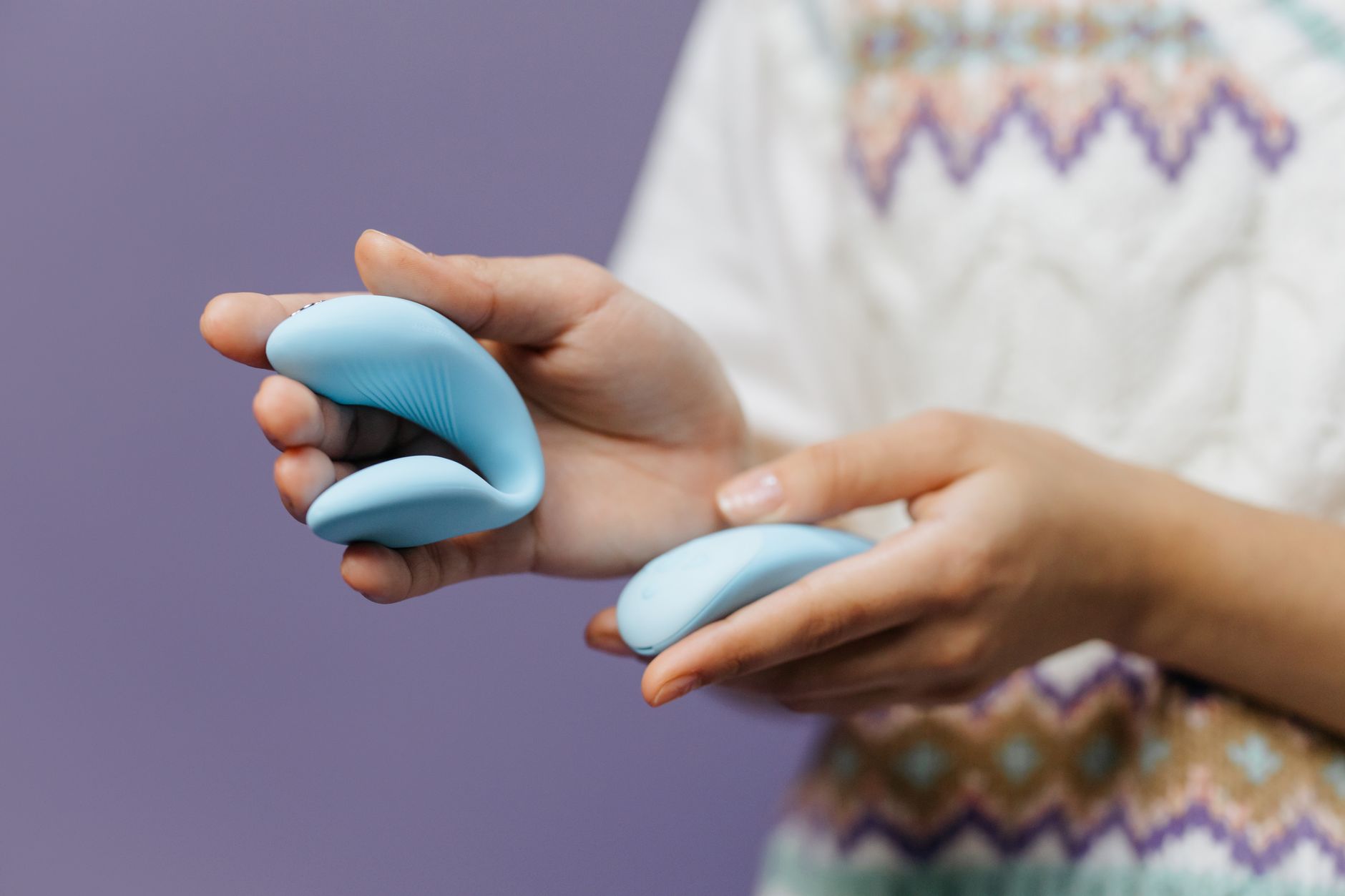
How to Use a Lemon Vibrator When Arousal Feels Slow to Build
Your body doesn't have a broken off-switch. When desire takes 20 minutes instead of 5, that's not a problem to fix. It's information. Here's how to work with it.
You're not broken. Arousal that takes time to build is not a malfunction. It's just how your nervous system is wired right now, and the reasons run deep.Maybe you're stressed. Maybe you're on medication that's shifted how your body responds. Maybe you're older and your hormones have changed. Maybe you're relearning intimacy after a long gap, or you're with a new partner and trust is still building. Maybe you're just tired most days and your baseline arousal is different than it was five years ago.
All of this is normal. What's not normal is the shame people pile on top of it.
Slow arousal becomes a problem only when you treat it as something to override instead of something to understand. That's where lemon clitoral vibrators change the game. They're built for exactly this scenario. The suction-based technology works differently than friction vibrators, which means it can help initiate arousal rather than assume it's already there.
Three main mechanisms are at play here, and they overlap.
Nervous system state. Arousal requires parasympathetic activation, the "rest and digest" side of your nervous system. If you're running on stress, cortisol, work deadlines, or relationship tension, your body stays in sympathetic mode. You're not choosing to be slow. Your system hasn't gotten the all-clear signal yet. A lemon vibrator alone won't fix cortisol, but it can signal to your nervous system that pleasure is on the menu. That signal, repeated, can help train your body to shift gears faster over time.
Hormonal baseline. Estrogen, testosterone, and progesterone all influence arousal speed. If you're in your forties, on birth control, or six months past a major life event, your hormonal floor might just be lower. This isn't a bug. It's an input variable.
Attention and distraction. Arousal requires mental space. If part of your brain is running a background thread about your inbox, your partner's mood, or your body image, arousal can't accelerate. It gets stuck waiting for clearance from your thinking brain. This is why the buildup takes longer for women and people with vulvas more than any other reason.
Here's what I recommend to clients who experience slow arousal.
Step one: give yourself 15 to 25 minutes minimum. Not because you're defective, but because you're going to use that time deliberately. Don't rush. Don't treat this as "getting warmed up so we can do the real thing." This is the real thing.
Step two: remove the goal of orgasm for the first 10 minutes. Sounds counterintuitive, but removing the achievement metric actually speeds arousal because you're no longer checking in with yourself about progress. You're not thinking, "Am I there yet?" You're just exploring sensation.
Step three: start with a lemon vibrator on the lowest setting. The Lem or other lemon sexual toys use air suction rather than buzzing, which means they stimulate differently than traditional vibrators. Start with pattern one or two, light pressure. Let your skin get used to the sensation. You're not trying to trigger an orgasm. You're trying to send a "pleasure is happening" signal to your nervous system.
Step four: build slowly. Move up to patterns three and four only after two to three minutes. Then four and five after another minute or two. This gradual escalation helps your arousal keep pace with the stimulation. Many people with slow arousal have been conditioned to skip the middle and jump straight to high intensity. That doesn't work. Slow matches slow.
Step five: vary the pattern. Don't lock into one setting for the whole session. Switch between patterns. Pause for 20 seconds, then resume. Vary intensity. This keeps your nervous system engaged because predictability can actually dull sensation. Novelty within a session resets attention.
If you're with a partner, slow arousal gets complicated because now you have two nervous systems in the room. One of the biggest myths is that slower arousal means you're less attracted to your partner. That's nonsense. It means your body needs the other person to understand the timeline.
Talk about this before you're in the middle of sex. "My arousal takes about 20 minutes to really kick in. That's not a sign something's wrong. That's just how I'm wired right now. It helps when we start with lower intensity and build gradually." Most good partners will hear this as a relief. They don't have to guess. They have information.
With a partner present, use a lemon clitoral vibrator as a shared tool. Some people find that having their partner hold the device, or having it work alongside manual stimulation, creates a continuity that speeds things up. You're getting multiple types of input, which can help your arousal accelerate. But the key is that it's shared attention, not solo performance.
If you're on SSRIs, blood pressure meds, or hormonal birth control, those can absolutely flatten your arousal curve. The temptation is to blame yourself. Don't. Blame the medicine. Then work with your doctor to see if there are alternatives, or adjust the timing of doses if possible.
In the meantime, a lemon sucker or clitoral vibrator can help because it provides external stimulation that doesn't rely on your body's internal arousal chemistry. You're not waiting for your hormones to do the work. You're giving your body a physical input that can trigger arousal despite the medication's dampening effect. This won't fix the root issue, but it makes the experience feel less broken.
Here's something I tell every client with slow arousal: your body isn't wrong. Your expectations might be. If you've spent years with a partner who got aroused in two minutes, or if you've internalized the idea that arousal should be automatic and instant, slow feels like failure. It's not.
Slow arousal often comes with deeper, more sustained pleasure. Because you're not spiking fast and crashing, you're building a platform. Orgasms that come after 20 minutes of gradual buildup feel different than ones that happen after two. Not better or worse. Different. Richer. More distributed through the body.
Also: your brain is involved. If you're using a lemon vibrator while thinking about what's for dinner, or whether you're doing this "right," arousal stalls. That's not the vibrator's fault. That's attention. So create conditions where your brain can actually check in with your body. Some people need silence. Some need music. Some need the lights on, some off. Some need to be alone first, or to have their partner's hand on them, or to read something. Figure out what actually gets your mind to join your body.
Slow arousal is only a concern if it's causing you distress or affecting your relationship. If you're fine with 20 minutes and your partner is fine with it, there's nothing to fix. But if arousal has essentially disappeared, or if there's pain involved, or if the timeline changed suddenly and dramatically, talk to a therapist or sex educator. Sometimes slow arousal is a signal that something else is happening. Trauma. Relationship rupture. Medical changes. A good professional can help you sort signal from noise.
One of the things lemon vibrators do really well is help retrain arousal. If you've spent months or years in a low-arousal state, your nervous system gets used to that baseline. Using a clitoral vibrator consistently, even briefly, can help recalibrate what arousal feels like. You're sending your body the message that pleasure is available. That it's worth paying attention to. That it doesn't need permission to accelerate.
Over weeks and months, many people find their arousal does begin to build faster. Not because they're "fixed," but because their nervous system recognizes the pattern. Pleasure happens here. This is safe. Let's engage. It's a form of nervous system retraining, and lemon sexual toys are particularly good at this because they provide consistent, specific input that doesn't require your body to already be in arousal mode.
Slow arousal isn't a flaw in your design. It's a feature of nervous system sensitivity. Some bodies need more evidence that safety and pleasure are available before they commit. That's actually smart. It means you're wired to check the room, make sure things are okay, and then lean in. Most of the time, the issue isn't that you need to speed up. It's that the world around you needs to slow down enough to meet you where you are.
A lemon vibrator does that. It gives you and your partner a shared language for deliberate, gradual pleasure. It removes the guesswork. And it sends your nervous system a very clear message: we have time. We're not rushed. Arousal can unfold the way it actually wants to.
That might be the most radically realistic thing you do for your sex life.
Hormone shifts are part of it. Estrogen and testosterone both decline with age, which can slow the initial arousal response. But there's also a neurological component. Blood flow changes, nerve sensitivity shifts, and the time it takes for your parasympathetic nervous system to fully activate increases. What matters is that slower arousal with age is completely normal and completely workable. A lemon clitoral vibrator helps because it provides direct stimulation that doesn't depend on your body's internal arousal cascade.
Not necessarily. Slow arousal is different from low desire. You can have plenty of desire but slow physical responsiveness. You can also have low desire and normal arousal speed. The two aren't linked the way people assume. If you want sex but your body takes 20 minutes to respond, that's slow arousal. If you don't really want sex at all, that's low desire. They need different solutions. If you're not sure which one you're dealing with, try how to use a lemon vibrator when stress kills your libido first, since stress affects both.
No. That's a myth. Your body doesn't get "numb" to vibrators the way it might to some stimuli. What can happen is that if you use the same device at the same intensity in the exact same pattern every single time, novelty decreases and arousal might feel less electric. That's why variety matters. Switch patterns, speeds, and pressure. Try how to use a lemon vibrator when your partner says it's too much stimulation if you're noticing desensitization, since that guide covers pacing and recovery.
There's no magic number, but I usually tell people to commit to 20 to 25 minutes minimum if you're trying something new. Your arousal curve might have a longer lead time than you expect, especially if stress is involved. If nothing is happening after 25 minutes of dedicated time and using a lemon vibrator on varying patterns, it's okay to stop. This isn't about forcing pleasure. But also, don't judge a tool or technique based on a single session. Try it three or four times before deciding it's not working.
Absolutely. SSRIs, blood pressure medications, some antihistamines, and hormonal birth control all affect arousal speed and intensity. If you've noticed a change, talk to your prescriber about timing doses differently, trying a lower dose, or exploring alternatives. In the meantime, external tools like lemon adult toys can help you work around the medication's effects while you sort out the medical piece.
For people who menstruate, yes. Arousal typically peaks around ovulation when testosterone is highest, and slows during the luteal phase. If you track your cycle and notice this pattern, you're not losing your mind. You can plan intentional pleasure time around your cycle, or use a lemon vibrator more liberally during the slow-arousal phases. This is also worth knowing if you're with a partner. "My arousal is slower this week because of my cycle" is useful information.
Your body is not a problem waiting to be solved. Slow arousal is a timeline, not a diagnosis. When you give yourself permission to meet that timeline without judgment, and when you use tools like lemon clitoral vibrators that are designed for gradual buildup, arousal doesn't feel broken anymore. It feels deliberate. Intentional. Yours.
That's worth the 20 minutes.
If you have questions about what tools or approaches might work for your specific situation, reach out and let's talk.
Baumeister, R. F., Catanese, K. R., & Vohs, K. D. (2001). Is there a gender difference in strength of sex drive? Personality and Social Psychology Review, 5(3), 242–273.
Gerdes, S., Komisaruk, B. R., & Whipple, B. (1994). Differences in arousal patterns in sexually functional and dysfunctional women. Journal of Sex & Marital Therapy, 20(3), 195–210.
Zarmezan, F., Khalatbarikiani, B., & Khabazkhoob, M. (2018). Factors affecting sexual satisfaction among reproductive age women in Iran. International Journal of Impotence Research, 30(5), 242–248.