How to Use a Lemon Vibrator When Rebuilding Desire After Medication Side Effects
Here's the thing nobody tells you when they hand you a prescription: the medication that's keeping you stable, managing your anxiety, or regulating your blood pressure might also be quietly killing your libido. This isn't a side effect that fits neatly into a category. It's not depression, it's not relationship trouble, it's not "you"—it's chemistry working against desire, and the frustration can actually compound the original problem you were trying to solve.
If you're on an SSRI antidepressant, an antihistamine for allergies, a beta-blocker for hypertension, or any number of common medications, sexual dysfunction is a documented effect. Not rare. Not just something that happens to other people. Common.
What medication actually does to arousal
Most sexual side effects from medication fall into three patterns. SSRIs and SNRIs (serotonin-based antidepressants) delay orgasm or make it harder to reach entirely by increasing serotonin signaling—which is great for mood but dampens the dopamine surge that triggers climax. Antihistamines dry out mucous membranes, including vaginal tissue, which tanks lubrication and sensation. Blood pressure medications reduce blood flow to the genitals, which means arousal takes longer to build and feels less intense.
Then there's the dopamine piece. Dopamine is the "go get it" neurotransmitter—it drives desire itself. When medication is tinkering with your neurochemistry to treat one thing, it's often flattening dopamine in the process.
This is not psychosomatic. This is not in your head. Your body is literally receiving a chemical message that dampens the cascade of events that usually leads to arousal and orgasm.
The first conversation to have with your doctor
Before you do anything else: talk to your prescriber. Not your partner, not your friend—your doctor. This matters because sometimes there's a simple fix. Maybe you can switch to a different class of medication with fewer sexual side effects. Maybe you can take your dose at a different time of day. Maybe a small adjustment works. Sometimes it doesn't, and you have to choose between the medication and accepting the sexual slowdown.
That choice is yours to make. You're not obligated to sacrifice sexual health for mental health, but you're also not obligated to white-knuckle it on an unsustainable medication. A good prescriber will explore options. If yours won't, that's worth noting.
Why a lemon clitoral vibrator helps when medication kills arousal
A lemon sucker-style vibrator like the Lem works for medication-dampened libido for three specific reasons:
First, it bypasses the arousal waiting game. When your baseline arousal is already in the basement thanks to medication, you're not going to wait 20 minutes for your body to warm up naturally. A lemon vibrator gets straight to work—the suction pattern stimulates the thousands of nerve endings in the clitoral area without requiring the deep physical arousal that medication is actively suppressing.
Second, it delivers targeted, consistent stimulation. When sensation is dulled, diffuse touch becomes almost frustrating—you can feel it, but not strongly enough to matter. The lemon vibrator's suction pattern is concentrated and rhythmic. It cuts through that numbness in a way traditional vibration sometimes can't.
Third—and this matters more than people admit—it gives you permission to feel pleasure without requiring a partner to be present. When medication is messing with your arousal, solo exploration with a lemon adult toy is often the fastest way to rebuild your connection to your own body. There's no performance pressure, no waiting for someone else, no explaining why it's taking longer than usual.
How to restart with a lemon vibrator when medication is involved
Start small and low. If you've been on a medication that flattens arousal for months, your nervous system might have forgotten what strong sensation feels like. Run your lemon clitoral vibrator on its lowest setting first. You're not looking for an orgasm in the first session—you're looking for sensation registering at all.
Give yourself 15 to 20 minutes without a goal. This is the opposite of productive. Set a timer if you need permission to stop. The point is to let your body remember that pleasure is still possible, even if it feels muted right now.

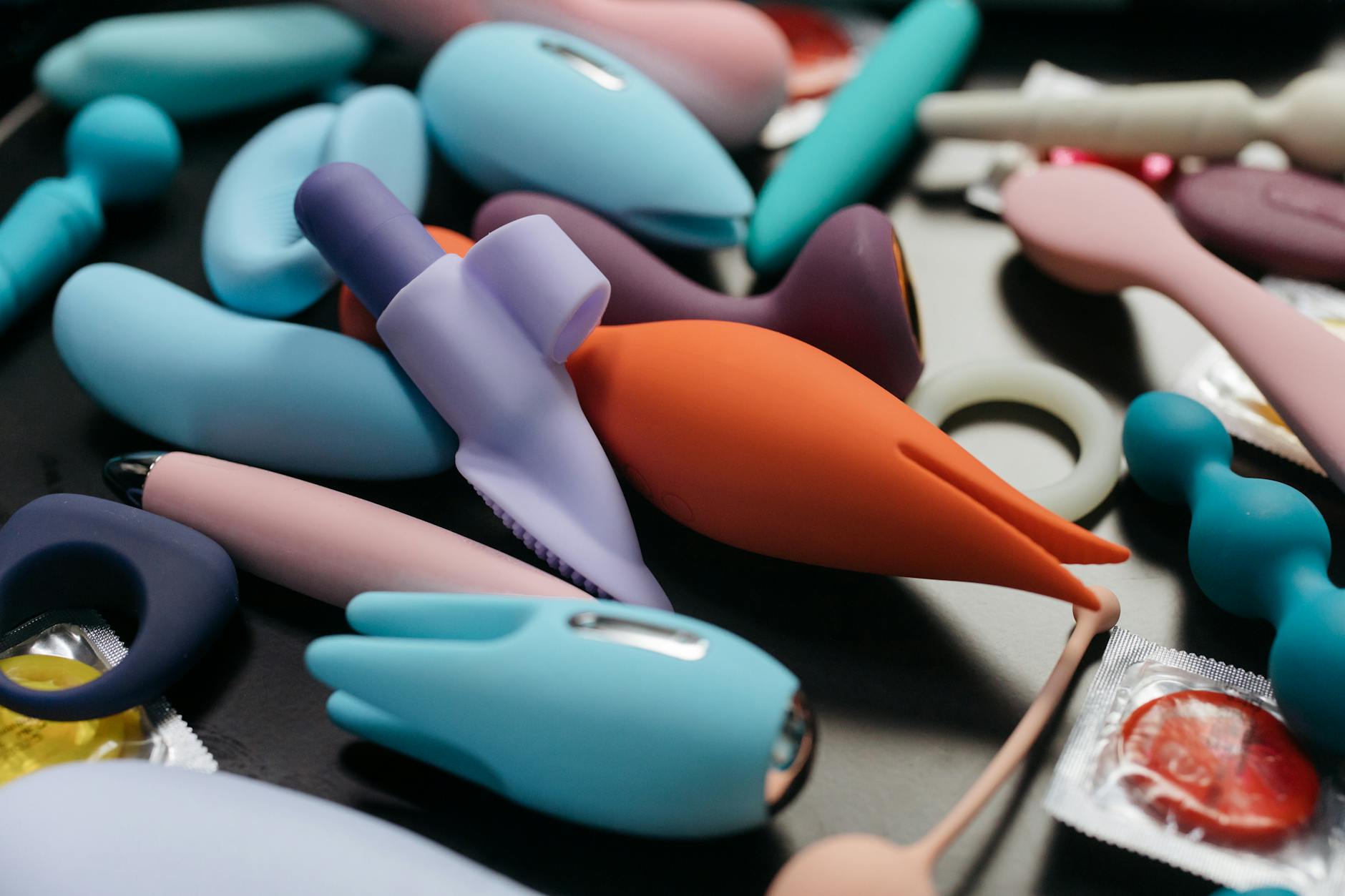
Photo by DRT.fm on Pexels
Use lubricant even if you think you don't need it. Medication often dries out the vagina, and a water-based lube will make the sensation from your lemon vibrator feel cleaner, sharper, and less friction-heavy. This is not a sign something's wrong—it's just chemistry.
Try different patterns. Most lemon vibrators come with multiple settings. Work through them without judgment. Some nights, pattern 1 will feel best. Other nights, something faster or more rhythmic will work better. Your nervous system is recalibrating, and it needs options.
What to expect in the first few weeks
Things might feel numb at first. That's okay. Sensation often comes back in stages, not all at once. You might get 60 percent of the feeling you used to have, feel frustrated, and then suddenly jump to 85 percent after another week. This isn't linear.
Orgasm might take longer or feel less intense initially. That's the medication still doing its job—which, remember, includes keeping you stable. As your body adjusts and your nervous system rebuilds its connection to pleasure, things usually shift. But "usually" is not "always," and if it's been months or years, your system might need real time.
You might feel frustrated or sad during this. That's not weakness. That's grief—grief for the sexual spontaneity you used to have, for the pleasure that used to come easily. Let that be there. It doesn't mean the rebuild isn't working.
Adding a partner back in (if you want to)
If you're partnered and medication has made sex feel impossible or joyless, bring your lemon clitoral vibrator into the dynamic with them. Not as a fix for you, but as an option. Some partners find it genuinely hot to watch. Others find it takes pressure off—they're not responsible for "making" you orgasm when medication is in the way.
See how to use a lemon vibrator when your partner wants to explore together for more on that conversation.
If you're rebuilding after being on medication that tanked your desire for a long time, the conversation might be bigger: "I want to reconnect with my own pleasure first, then we can figure out what works for us." That's not rejection. That's honesty.
When to reconsider the medication itself
Sometimes, after a few months of rebuilding with a lemon vibrator, sexual function comes back enough. Other times, it doesn't—and you're left choosing between mental stability and sexual aliveness.
If you're at that choice point, go back to your doctor. Serious. There might be augmentation options (adding a medication that counteracts the sexual side effect), or a different class of drug entirely. Bupropion, for example, doesn't usually cause sexual dysfunction the way SSRIs do. Buspirone is used as an add-on specifically to reverse SSRI sexual side effects.
You're not being picky or vain by wanting both mental health and sexual pleasure. You deserve both, and sometimes the right provider can help you get there.
Building patience into the process
Medication-induced sexual dysfunction is one of the few sexual challenges that genuinely requires time and consistency rather than technique. You can use your lemon vibrator perfectly and still not see results for weeks or months because your nervous system is literally rewiring itself.
This is where patience becomes a tool. Not resignation—patience. The difference is that patience is active. It's showing up with your lemon adult toy regularly, even when nothing is happening. It's trusting that sensation can come back. It's letting your body move at its own pace instead of forcing outcomes.
Try how to use a lemon vibrator after an extended break from sex for more strategies on slow reconnection.
People also ask
Can I switch medications to fix sexual side effects?
Maybe. Some medications have fewer sexual side effects than others. A psychiatrist familiar with sexual side effects (not all of them are) can sometimes swap you to bupropion, mirtazapine, or another option. Sometimes a lower dose helps. Sometimes the trade-off isn't worth it for your mental health. It's a conversation worth having with your prescriber, but not a guarantee.
How long does it take for sexual function to come back after stopping medication?
This varies wildly—anywhere from a few weeks to several months. Some people recover quickly, others find that sexual function stays dampened for a while even after stopping the medication. If you're thinking about stopping, talk to your doctor first. Don't just quit.
Will a lemon vibrator work if I'm still numb from medication?
Yes, often better than other approaches. The lemon sucker's concentrated suction pattern cuts through numbness more effectively than diffuse vibration. You might not feel much at first, but your nervous system can still register the stimulation, and over time, sensation usually builds.
Is it normal to need my lemon vibrator on high power when I'm on antidepressants?
Completely normal. Medication dampens arousal, which means your nervous system needs stronger stimulation to register pleasure. This doesn't mean your body is broken—it means medication is doing exactly what it's designed to do. Your lemon clitoral vibrator can work around that.
Can using a lemon vibrator help me decide if I should switch medications?
It can give you useful data. If you've been using a lemon vibrator consistently for 4 to 6 weeks and there's still zero sensation, zero arousal building, zero interest—that's information worth bringing to your doctor. It suggests the medication's sexual effects might be too much to work around. But if sensation is slowly coming back or feels present some days and not others, that's also useful information.
What if my partner is also on medication with sexual side effects?
You're both in the same boat, which is actually less isolating. See how to reconnect physically after emotional distance grows for strategies on rebuilding intimate connection when both partners are affected.
The bottom line
Medication that keeps you mentally well is worth protecting. Sexual pleasure is also worth protecting. These things are not in opposition, even though it feels that way when medication is in the middle. A lemon vibrator is one tool for rebuilding arousal and sensation when pharmaceutical side effects have flattened both. It won't work overnight, it won't erase the frustration, and it won't replace conversations with your doctor. But it can help your nervous system remember that pleasure is still possible, even when chemistry is working against you.
If you're stuck in this—medication working for your mental health but destroying your sex life—you don't have to choose between them forever. Start with your lemon clitoral vibrator, keep talking to your doctor, and give yourself permission to rebuild slowly. Sensation usually comes back. Desire usually comes back. It just takes a little more patience, and the right tools.
If you're ready to explore this, the Lemon vibrator is designed specifically for precise stimulation and sensation rebuilding. Visit our shop or reach out to our team if you want to talk through which lemon sexual toy might work best for you.