Let's start with the obvious part
Your body hasn't forgotten how to feel pleasure. What's changed is the mental load. Whether you've been abstinent for a year, five years, or longer, the gap creates a new kind of friction.physical tension, sure, but mostly the weight of expectation and uncertainty.
I work with clients rebuilding their sex lives after infidelity, grief, illness, and just plain burnout. The pattern I see consistently: they think the problem is physical. It's almost never just physical. The lemon clitoral vibrator becomes useful not because your body is broken, but because restarting with a tool that requires zero pressure (from a partner, from yourself, from cultural scripts) removes a thousand small complications.
Here's what I want you to know first. You don't owe anyone sex. Not even yourself, not yet.
Why abstinence changes how your body responds
Physically, the clitoris doesn't atrophy from disuse. The neural pathways stay intact. But a few things do shift. Blood flow patterns take time to rebuild. Pelvic floor muscles that have been underused can feel tight. Your nervous system has gotten used to a lower baseline of arousal.
Most importantly: your brain has created a narrative around sex being absent. That story doesn't disappear the moment you decide to restart. It sits in your nervous system like background noise.
What I tell my clients is this. When you've been away from something intimate for a long time, your system needs permission to gradually reactivate. A lemon vibrator is less intimidating than a partner. It's less loaded than your own hand, which might carry its own baggage. It's designed for exactly what you need right now: sustained, consistent stimulation that doesn't depend on anyone else's mood or performance.
The mental reset before you even start
Three things matter more than any physical technique.
First, decide why you're coming back. Are you restarting because you want to, or because you feel you should? That distinction is everything. If it's "I miss this part of myself," you're working with something real. If it's "I'm supposed to want this," you're fighting your own resistance, and no tool fixes that.
Second, separate sex from intimacy. Long abstinence often happens inside relationships that have other problems. If you're returning to sex but the relationship itself is still fractured, a lemon vibrator won't fix that. Sometimes restarting solo first, on your own timeline, is smarter than jumping back into partnered sex.
Third, give yourself permission to be awkward. Your body will feel unfamiliar. Your arousal might take longer. You might feel self-conscious the first time. All of that is normal and temporary. The biggest mistake I see is people treating awkwardness as failure instead of as part of the process.
How lemon clitoral vibrators work for this specific moment
The Lem and similar lemon sucker designs use gentle suction instead of traditional vibration. Here's why that matters for someone returning to sex after a long break.
No pressure to perform. Traditional vibrators require you to find the exact right angle, pressure, and rhythm. After abstinence, that feels like a test you're likely to fail. Suction works differently. It does the work. You just stay with it.
Lower initial intensity. Most people returning to sex underestimate how sensitive their clitoris has become. Suction at a low setting (typically pattern 1 or 2 on the Lem) feels gentle and exploratory rather than overwhelming. You can increase from there.
A built-in rhythm. Because the suction pulses rather than buzzes constantly, your nervous system doesn't get exhausted the way it might with relentless vibration. Your body can actually relax into it.
Consistency without judgment. The device doesn't care if it takes you thirty minutes to orgasm. It doesn't get tired. It doesn't interpret slowness as rejection. That sounds silly until you realize how much mental energy you've been spending worrying that your body is taking "too long."
A practical sequence for week one
I recommend starting solo, even if you're in a relationship. Here's why: you need to rebuild your relationship with your own pleasure before you add someone else's expectations into the room.
Day one and two. Explore your body without the vibrator. Shower, touch your legs, your hips, your breasts. Not with a goal of arousal. Just rebuilding the sense that this body is yours and it can feel things. Fifteen minutes maximum. The point is to stop, not to achieve anything.
Day three through five. Introduce the lemon vibrator on the lowest setting. No expectation of orgasm. Start on your inner thigh, not directly on the clitoris. Let your body remember what stimulation feels like. Thirty seconds here, then wait. Your nervous system is recalibrating. Go slow with this part.
Week two. Move directly to the clitoris on setting 1. This is where most people experience a wave of feeling that might even be emotional. That's fine. Arousal after a long absence can bring up joy, sadness, grief, or relief all at once. It's not a malfunction.
Once this starts to feel predictable, you can increase to setting 2 or 3. The key is that you're in complete control of the pace.
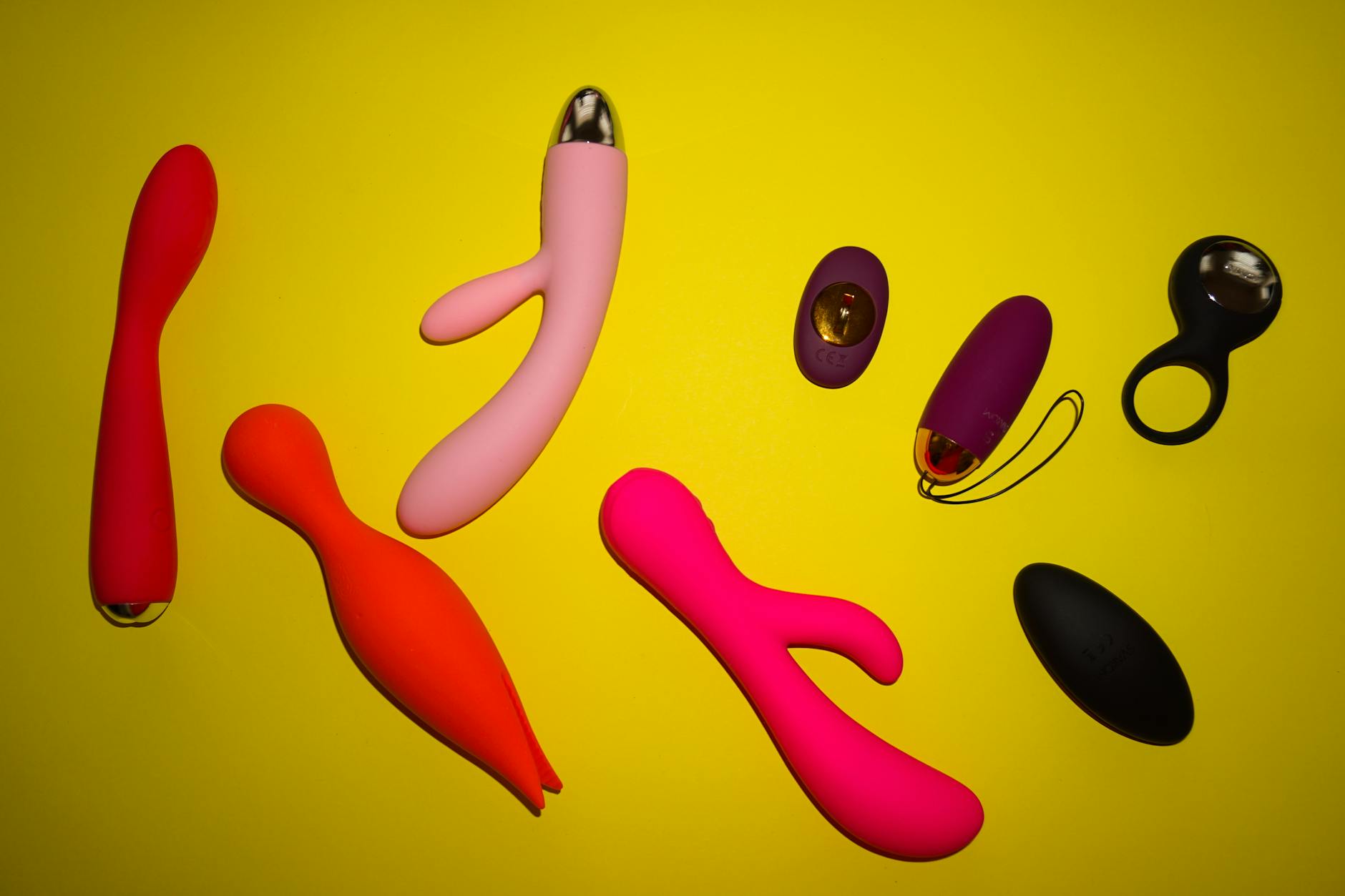
Photo by DRT.fm on Pexels
If you're returning with a partner
Honestly? Start solo first. I don't recommend jumping directly into partnered sex after years away. The anxiety of performing for someone else will sabotage what you're trying to rebuild.
Once you've spent two or three weeks reconnecting with your own arousal, the conversation with your partner changes. Instead of "I want us to have sex again," it's "I'm relearning my own pleasure. I'd like you in the room while I use this tool." That's radically different.
Most partners respond well to watching, because it takes the pressure off them to figure out what you need. You're literally showing them. And you maintain complete control of the pacing and intensity.
If your partner is dismissive of the tool or the process, that's real information about whether this relationship is ready for sex to restart. Don't ignore it. That's where many of my clients realize that the abstinence wasn't the problem.
When you do move to partnered sex, let the lemon vibrator stay in the picture. Use it on yourself during sex. Use it beforehand to warm up. There's no timeline for removing it. Some people use lemon clitoral vibrators with partners indefinitely. That's not a crutch. That's just smart sex.
Common snags and how to navigate them
Nothing happens the first time. Completely normal. Your arousal system needs multiple signals that it's safe to respond. Three to five sessions is the minimum before you judge whether this is working.
You feel nothing at all, even on the highest setting. Stop. Rest for a few days. Then try again. Sometimes your nervous system needs more runway. If complete numbness continues beyond a week, check in with a pelvic floor therapist. Sometimes tension is holding sensation hostage.
You get aroused but can't finish. This is incredibly common after abstinence. Your body has lost the pattern. That doesn't mean anything is wrong. Keep using the vibrator at the same setting for longer sessions. Twenty to thirty minutes. Your nervous system will eventually catch up.
You feel emotional or anxious during arousal. This happens because pleasure and trauma, or pleasure and grief, can live close together in your nervous system. If it's manageable emotion, keep going. If you feel unsafe, stop and come back another day. This is not weakness. This is wisdom.
Logistics that actually matter
Water-based lubricant. Even though suction works without lube, a small amount makes it more comfortable, especially if your clitoris is sensitive. Apply it to the toy, not directly to yourself.
Privacy and time. Thirty minutes minimum, no interruptions. Your nervous system cannot relax if you're half-listening for someone to knock on the door.
A charger nearby. Nothing kills momentum like the battery dying. The Lem holds a charge well, but set it on the charger the night before you plan to use it.
Clean the toy afterward. This is simple care and also a ritual that closes the experience. Rinse with warm water and mild soap.
When to reach out for help
If pain appears during any of this, pause. Talk to a pelvic floor physical therapist. Pain is your body saying something needs attention, and it's fixable.
If months pass and arousal still isn't returning, consider whether depression, medication side effects, or relationship issues are the real culprit. Sometimes a vibrator can't fix what needs a therapist. That's okay. That's actually the smart move.
If the returning-to-sex process triggers memories of past sexual trauma, reach out to a trauma-informed therapist. You don't have to white-knuckle your way through this alone.
Restarting your sex life is not a sprint. There's no finish line where you're "back to normal." You're building something new with a body and nervous system that have changed. The lemon clitoral vibrator is just a tool. The real work is giving yourself permission to take your time.
FAQ: Returning to sex after abstinence
How long does it typically take to feel aroused again after years without sex?
Most people report noticeable arousal returning within two to four weeks of consistent (but low-pressure) stimulation. "Consistent" means three to five times weekly, not every single day. Your nervous system responds better to regularity than intensity. Some people take longer, especially if depression, medication, or relationship stress is present. Three months is not unusual. There's no deadline.
Can using a vibrator alone create the feeling that partnered sex is unnecessary?
No. They're completely different experiences. A lemon vibrator gives you control and consistency. Partnered sex involves vulnerability, reciprocity, and psychological intimacy that a device cannot replicate. Using a vibrator solo actually tends to make people more interested in partnered sex, not less, because they've rebuilt their capacity for pleasure.
Is it normal to feel emotional or cry the first time after a long break?
Completely normal. Arousal after abstinence can crack open a lot of feeling. Relief, grief, joy, frustration. Your body has been offline. Reactivating it is legitimately emotional. You're not broken. You're reintegrating a part of yourself. Let the feeling move through.
What if my partner pressures me to move faster than I'm comfortable with?
That's a relationship problem, not a sex problem. The pace of your return should be entirely yours. If your partner is pushing, that tells you something important about whether this relationship is safe. I'd recommend a conversation with a couples therapist before restarting sex with them.
Do I need to use lube with a lemon sucker vibrator?
Not strictly necessary, but a small amount of water-based lube makes it more comfortable, especially if your clitoris is sensitive after abstinence. Apply it to the toy, not your body. Never use silicone-based lube with silicone toys.
If I'm not having orgasms yet, does that mean the vibrator isn't working?
Not at all. Orgasm is the last thing to return after abstinence, not the first. For the first month or two, the goal is just arousal and sensation. You're rebuilding a connection. The orgasm will follow. If you're feeling arousal but no orgasm after six weeks, that's when to consult a pelvic floor therapist or sex therapist.
You've got time
Coming back to your sex life is not about force or performance. It's about meeting your own body where it actually is, not where you think it should be. A lemon vibrator removes a lot of the second-guessing from that equation.
Your nervous system knows how to feel pleasure. You just need to remind it slowly, consistently, and with full permission. That's the whole process.
If you're struggling with the emotional or relational side of returning to sex, reach out. That's exactly the kind of transition I work with.