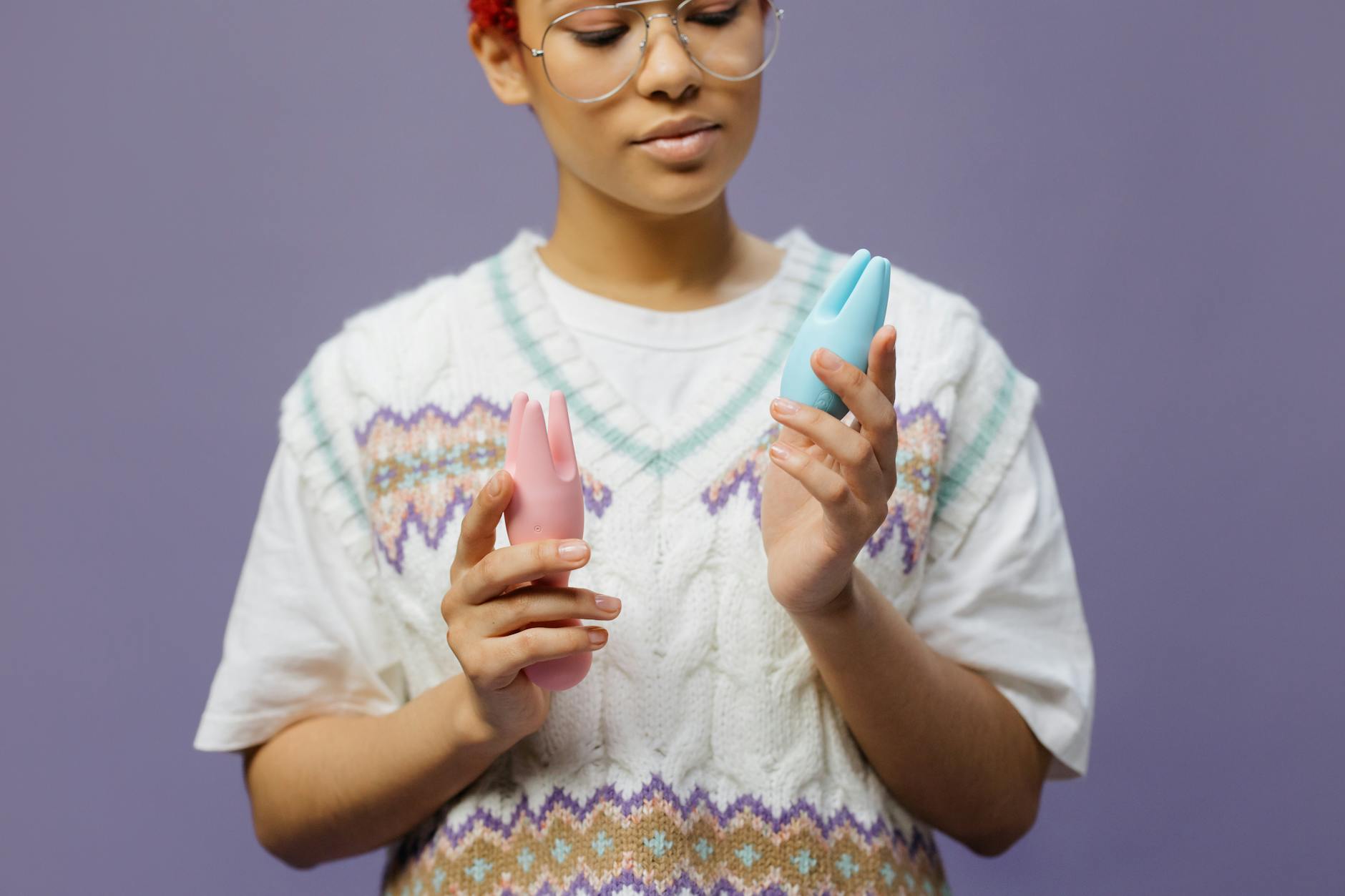
Let's name the thing nobody talks about
Divorce doesn't just end a marriage. It ends the sexual story you've been living in for years. When you're back in someone's bed for the first time in a decade, the self-consciousness isn't just about your body. It's about forgetting what you like, questioning whether you still work, and realizing your ex's touch is gone and it's not coming back. That's a lot to carry.
Here's what matters: you're not broken. Your pleasure is still there. It's just quiet right now, and it needs patience. A clitoral vibrator like the Lem can help you find it again, but the real work happens in conversation first.
Why the first time feels so loaded
Your nervous system has been in protection mode. Whether the divorce was mutual, painful, or just slow, your body learned to turn off arousal as a survival mechanism. That's normal. It's also completely reversible.
What complicates it: you're trying to turn arousal back on while performing it for someone new. That's two jobs at once. Most people freeze. The trick is to separate them. Solo practice with a lemon clitoral vibrator teaches your body what pleasure feels like again, without the pressure of someone watching or waiting.
Then, once you know what you respond to, you bring that knowledge into the bedroom.
The conversation you need to have first
I work with a lot of people repartnering after divorce. The ones who avoid this conversation tend to fake it through their first few times. They nod when asked if something feels good. They try positions that don't work. Then they blame themselves for being "rusty" instead of realizing they never actually said what they needed.
You don't need to have a therapy session before sex. You do need five minutes of honesty. Try something like this:
"I haven't been with anyone in a long time. My body's going to need some patience. Sometimes I might want to slow down or try something different. I might want to use a toy sometimes. None of that means something's wrong with you. It's just how I come back to pleasure."
Honestly? Most people find that attractive. It's clear. It's vulnerable. It puts you in control of the narrative instead of leaving them guessing.
How to use a lemon vibrator solo before partnered sex
Think of this as reconnaissance. You're relearning your own body so you can guide your partner later.
Start with a water-based lubricant. Even if you're aroused, use it anyway. Years away means your tissue might respond slowly, and lubrication removes friction anxiety. Your nervous system doesn't have to work so hard.
Begin on the lowest setting. The Lem on pattern one or two is gentle enough that you can relax into it. Spend 10-15 minutes just letting your body respond. Don't chase orgasm. Listen instead. Notice where sensation concentrates. Notice your breathing. Notice what rhythm feels natural.
If you hit a wall (numbness, frustration, boredom), that's fine. Your nervous system might still be protective. Come back tomorrow. This isn't a performance. It's practice.
Once you find a rhythm that works, keep going back to it. Your body will start to anticipate. Arousal will build faster. By your third or fourth solo session, you'll have a roadmap. Write it down if it helps: pattern number, pace, what you were thinking about, how long it took.
Bringing the vibrator into partnered sex
You've done the solo work. You know what you respond to. Now the question is: how do you introduce a lemon sexual toy into the bedroom with someone new?
Don't spring it in the moment. Talk about it first. "I've been using a vibrator to help myself get back into pleasure. I'd like to use it when we're together sometimes." That's it. You're not asking permission. You're giving information.
The first time you use it together, let him be involved. He can hold it. He can watch your face and adjust the pattern based on your reaction. This makes it collaborative instead of substitutional. Many people worry a vibrator threatens their partner. It usually doesn't. What threatens people is feeling left out.
Start with him using hands or his mouth, and introduce the vibrator for the last part, when you're already aroused. This builds the bridge from partnered sex to solo touch. Your nervous system learns: "This person plus this tool equals pleasure."
Managing self-consciousness (the real obstacle)
Your body looks different than it did five or ten years ago. Your partner knows this. He chose to be there anyway. Repeat that to yourself.
Where shame usually creeps in: when you're using a vibrator and your face is twitching, your breath is loud, or you're sweating. These are all signs of pleasure. Your partner seeing you like this isn't embarrassing. It's intimate. He's watching you have an orgasm. That's the whole point.
If you find yourself freezing or performing instead of feeling, pause. Take a breath. Say something like, "I'm in my head. Can we slow down?" Your partner isn't a mind reader. He's probably also nervous. The communication itself is the fix.
The role of the lemon vibrator in rebuilding trust (with yourself)
Divorce can mess with your sense of your own desirability. You weren't wanted in the end. That thought might surface when you're naked with someone new. A vibrator helps because it's evidence. It proves your body still works. It proves you can still feel. It proves pleasure is still possible without proving anything to anyone else.
Use that evidence. Remind yourself of it on hard days. You came back. You're here. You're vulnerable with a new person. That's brave. The lemon clitoral vibrator is just a tool helping you do that bravely.
What if you're still stuck after a few months
If you've had time, you've used a vibrator solo, and you still can't relax during sex with your partner, something else might be happening. Sometimes the issue isn't physical. It's emotional. You might not be ready. You might be with the wrong person. You might need to talk to a therapist about the divorce itself.
All of those are valid. A vibrator can't fix grief or trust issues. What it can do is remove the physical friction so you can hear what's actually going on underneath.
The pleasure equation after divorce
Loneliness plus unfamiliar touch plus doubt equals a lot of noise in your nervous system. A clitoral vibrator like the Lem quiets some of that noise by giving you something reliable to feel. Then, over time, your partner becomes reliable too. The vibrator becomes optional. But it never stops being useful.
You don't have to figure this out alone. You don't have to fake it. You don't have to wait until you're "ready." Start where you are. Use the tools that work. Talk to your partner. Be patient with yourself. Pleasure isn't something you lost in the divorce. It was just waiting for you to come back to it.
People also ask
Should I tell a new partner I'm using a vibrator before we're intimate?
Yes. Not as a confession, but as information. "I've been using a vibrator to help myself get back into pleasure. I'd like to use it sometimes when we're together." Frame it as something that helps you feel good, not something that replaces him. Most partners find this honest and actually reassuring.
How long does it usually take to feel aroused again after divorce?
There's no universal timeline. Some people reconnect with desire in weeks. Others take months or years. A lot depends on how long the marriage was, how it ended, and your nervous system's baseline. Solo exploration with a lemon vibrator tends to speed this up because you're not managing another person's reaction while reconnecting with your own body.
Can a vibrator actually help with anxiety around new sex?
Yes, in two ways. First, practicing solo with one (like the Lem) teaches your body it still responds to pleasure, which reduces performance anxiety. Second, using one with a partner takes pressure off "proving" arousal through traditional methods. It's permission to feel pleasure differently than you did before. That permission itself is calming.
What if my new partner doesn't want me to use a vibrator?
That's a compatibility conversation, not a you problem. People who are comfortable with you having pleasure are usually good partners. People who see a vibrator as a threat or a criticism are showing you something important early. You get to decide what you need and what you won't negotiate on. Your pleasure isn't negotiable.
Is it normal to feel numb the first few times?
Completely normal. Your nervous system is in protective mode. Numbness is actually protective. It means you're not flooding with sensation before you're ready. Keep practicing solo with a lemon clitoral vibrator on low settings. The sensation will come back. If it doesn't after three months of regular use, check in with a therapist or your doctor.
How do I know if I'm actually ready to have sex or just lonely?
That's the million-dollar question. Here's a rough test: if you're excited to see this person again, you like talking to them, and the thought of physical intimacy feels curious rather than desperate, you're probably ready. If you're doing it to prove you're "normal" again or to fill a void, you might want to wait. The vibrator can help you distinguish. If using one solo feels good and grounding, that's a yes. If it feels obligatory, that's a no.