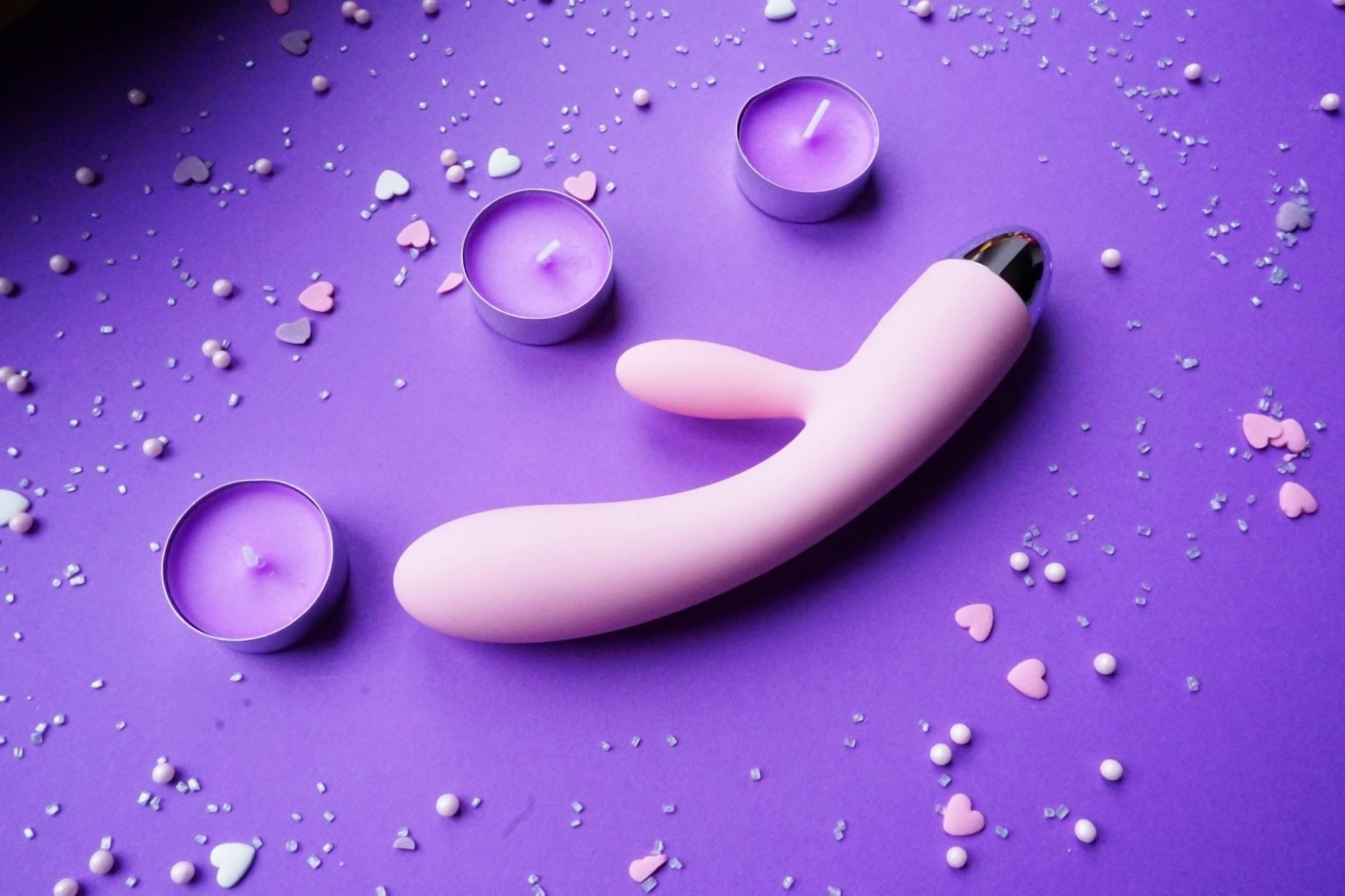
How to Use a Lemon Vibrator When You Feel Anxious About Initiating
Initiation anxiety freezes desire before it starts. Here's how solo exploration with a lemon clitoral vibrator rebuilds confidence, separates pleasure from performance, and helps you reclaim your ask.
Let's be real: initiation anxiety is one of the most common relationship friction points I see, and it rarely gets talked about. You want sex. Your partner probably wants sex. But somewhere between the thought and the ask, anxiety hijacks the whole thing. Your brain floods with what-ifs. What if they say no? What if they're annoyed at being asked? What if you're interrupting? What if your body doesn't respond the way you want?
By the time you've spiraled through those questions, desire has evaporated.
Here's what research actually shows: initiation anxiety isn't about your partner rejecting you. It's about the fear of rejection itself, which is neurologically the same as physical pain. Your brain treats a "not right now" like a threat, and threat kills arousal faster than anything else.
The fix isn't to "just ask" or "be more confident." You can't think your way into confidence you haven't built yet. You have to practice pleasure without the stakes.
This is where a lemon vibrator changes the equation. Using a clitoral vibrator solo lets you:
Build arousal on your timeline, not under performance pressure
Practice pleasure without needing anyone's approval
Separate sensation from relational fear
Strengthen the neural pathway between initiation (the ask) and reward (orgasm)
When you've experienced your own consistent pleasure, initiating with a partner stops feeling like a risky proposition. It feels like sharing something you already know is good.
Anxiety about initiating usually manifests in three ways.
First: racing thoughts. You're planning the approach while simultaneously imagining rejection, and your nervous system reads this as threat. Your cortisol spikes. Arousal requires the opposite neurological state.
Second: physical tension. Your pelvic floor tightens. Your chest gets tight. Your breathing becomes shallow. This physical tension makes pleasure harder to access, which then confirms your worry that something's wrong with you.
Third: disconnection. You go numb to your own body's signals. This is dissociation, a protective mechanism your nervous system uses when it's overwhelmed. You can't initiate from a place of numbness.
A lemon vibrator addresses all three, but only if you use it differently than you might expect.
The key is separating your solo practice from the performance anxiety that lives in your relationship.
Set a time when you're alone, not rushed, and your brain knows interruption isn't a threat. This matters more than the setting itself. Your nervous system needs predictability.
Start with the lemon vibrator on a low suction setting, but here's the part most people skip: spend 10 minutes just with your own touch first. Hand touch, not the device. This reconnects you to sensation before you add vibration. Your nervous system learns that pleasure is accessible without external tools.
When you introduce the Lem or another lemon clitoral vibrator, start on pattern 1 or 2. The air-suction technology means you're not fighting direct friction, which is especially important if anxiety has made your tissues tender. Suction stimulates nerves without pressure, so your body can relax into it rather than bracing against it.
As you build arousal, notice what you're thinking. Most people with initiation anxiety are still narrating a story (what if this takes too long, am I doing this right, what if someone hears). Name it. "There's the anxiety story." Then return attention to sensation. This is literally training your brain to interrupt the anxiety loop.
Orgasm isn't the goal here, though it often comes. The goal is practicing the experience of building arousal and following it through without external judgment or timeline pressure.
Honestly though, solo practice only works if it's paired with a shift in how you approach your partner.
Weeks 1-2: Solo exploration with your lemon vibrator, 2-3 times per week. No performance pressure. You're purely learning what your body wants when it's not anxious.
Week 3: Talk to your partner about what you've learned. Not a big conversation. Just: "I've been exploring what I enjoy, and I'd like to share that with you." Notice how different this feels from initiating sex. You're not asking for permission to have pleasure. You're inviting them into something you already know is good.
Week 4+: Use the Lem during partnered sex, either solo or together. This does two things. First, it gives your nervous system permission to focus on sensation rather than performance (you're already being stimulated, so the pressure to orgasm for your partner's benefit lifts). Second, it shows your partner exactly what you respond to, which removes the guesswork from future initiations.
Clitoral vibrators work differently than internal ones. They focus on external sensation, which means they don't trigger the same pelvic floor tension that anxiety-prone nervous systems often have. Air-suction technology (the design that makes lemon vibrators unique) is particularly good for this because it works with your tissue rather than demanding it relax.
There's also something about the simplicity of air-suction devices that helps anxious brains. You don't have to think about angle, depth, or speed variation. The suction does the work. This takes the performance thinking offline, which is exactly what your nervous system needs to downshift.
If you've used a lemon vibrator when arousal feels slow to build, you already know how these devices work with your natural response patterns. Initiation anxiety just means you need to practice that arousal without relational stakes attached.
Sometimes initiation anxiety hides a different fear. You're not actually afraid of rejection per se. You're afraid that initiating reveals how much you want your partner, and that wanting makes you vulnerable.
This is called anxious attachment, and it's incredibly common. The fix isn't just solo practice with a lemon vibrator. It also requires a conversation with your partner about what rejection actually means to them. Often, a "not right now" isn't "I don't want you." It's "I'm tired" or "I'm stressed." Knowing this neurologically is different from knowing it intellectually.
Once you've rebuilt confidence through solo practice, the conversation with your partner shifts dramatically.
Instead of: "Do you want to have sex?" (which is vulnerable and puts the burden of initiation on them to comfort you), try: "I'd like to explore together. Here's what I've learned feels good for me."
This reframes initiating from a request (which can be refused) into an invitation (which creates curiosity). Your partner doesn't have to comfort your anxiety about rejection. They get to say yes to something concrete.
If they still say no, that's data about timing, not about you.
After three to four weeks of solo practice with your lemon vibrator, most of my clients report that initiation anxiety drops by 60 to 70 percent. Not because they suddenly feel fearless. But because they've separated their pleasure from their partner's response. Your nervous system learns: I can have good sensation on my own. Sharing this with someone is a bonus, not the only way to access it.
Sometimes even after solo practice, you'll go to initiate or during sex and anxiety floods in. Here's what to do.
Stop. Tell your partner what's happening (not "I'm anxious," but "my nervous system just spiked"). This is not a failure. This is information.
Use your lemon vibrator solo for 10 minutes while your partner is elsewhere. Not as punishment. As a reset. Your nervous system knows what pleasure feels like in a non-anxious state. Reminding it of that state helps you return to partnered sex from a calmer place.
Yes, actually. Low libido and initiation anxiety often feed each other. Anxiety suppresses desire. Suppressed desire makes initiating feel even scarier. Solo practice with a lemon clitoral vibrator breaks that loop by proving to your nervous system that pleasure is still accessible. Start with 5 to 10 minutes, twice a week. Consistency matters more than duration.
That depends on your relationship dynamic, but here's what I recommend: tell them. Not as confession. As information. "I'm practicing pleasure solo because I want to rebuild confidence about initiating with you." This removes shame, invites them into the process, and often makes them more responsive when you do initiate. Partners usually want to help. They just need to know what they're helping with.
Then the privacy problem is bigger than the vibrator. Lock the door. Set a time when you know you're alone. If you live in a space where that's impossible, this is a boundary-setting conversation you need to have with whoever shares your space, not a vibrator problem. Your nervous system can't relax without genuine privacy. Create that first.
Most people see a shift within 2 to 3 weeks of consistent solo practice, 2 to 3 times per week. But confidence isn't a light switch. It's more like gradually turning up the volume. By week four, most of my clients report they've initiated at least once without the same level of anxiety. The anxiety doesn't disappear, but it stops blocking action.
No. That conversation happens without the vibrator. But you can use it beforehand to calm your nervous system so you can speak from a grounded place rather than an anxious one. 10 minutes of solo pleasure before a vulnerable conversation with your partner is actually smart nervous-system management.
That's a different conversation, and it's worth having. Solo practice with a lemon vibrator will help you feel better, but it won't solve the relational issue. If your partner's desire for you is genuinely in question, that's something to address directly or with a couples therapist. Pleasure tools help with nervous-system regulation and confidence building. They're not substitutes for genuine relational connection.
Initiation anxiety is rooted in the belief that your pleasure is something someone else has to agree to. Solo exploration with a Hello Nancy lemon vibrator rewires that. Your pleasure is yours. Sharing it is the invitation, not asking for it.
That shift changes everything. Not because you suddenly feel fearless. But because you've separated your pleasure from your partner's response. That separation is what lets you ask. That asking, repeated a few times, becomes what confidence actually is.
Ready to rebuild? Start with solo practice. The rest follows.