Let's talk about slow arousal, because it's way more common than you think
You're not doing anything wrong. Your body isn't broken. But if you're someone whose clitoral sensation takes time to wake up—where 5 minutes of stimulation feels like nothing, where you need a slow burn instead of instant fire—you've probably felt the creeping frustration of pressure to "get there" faster. That pressure makes it worse, not better.
Here's the thing nobody tells you: delayed clitoral sensation is often about nervous system activation, not physical dysfunction. Your body is waiting for the right signal. And a lemon clitoral vibrator, with its precise suction pattern and consistent pressure, can be that signal.
Why sensation takes longer for some bodies
Three main reasons your clitoris might feel like it's waking up slowly.
First: nervous system state. If you're in a sympathetic-dominant state (that's the "fight, flight, freeze" zone), your body literally deprioritizes genital sensation. Your nervous system is trying to keep you alert. Real arousal requires parasympathetic activation. That takes time if you're starting from a stressed, distracted, or hyper-aware place. Most of us are, honestly.
Second: attention distribution. Your brain can only consciously process so much input. If you're monitoring whether you're aroused, checking the clock, wondering if this is taking too long, or comparing yourself to some imagined baseline, you're literally using up the bandwidth your body needs to feel sensation building. It's not laziness. It's cognitive load.
Third: the wrong kind of stimulation for your neurology. Some people's clitorises respond better to sustained, rhythmic, moderate pressure than to quick, variable friction. If you've been trying vibrators with high frequency or irregular patterns, you might have been using the wrong tool all along. That's the insight that changes everything.

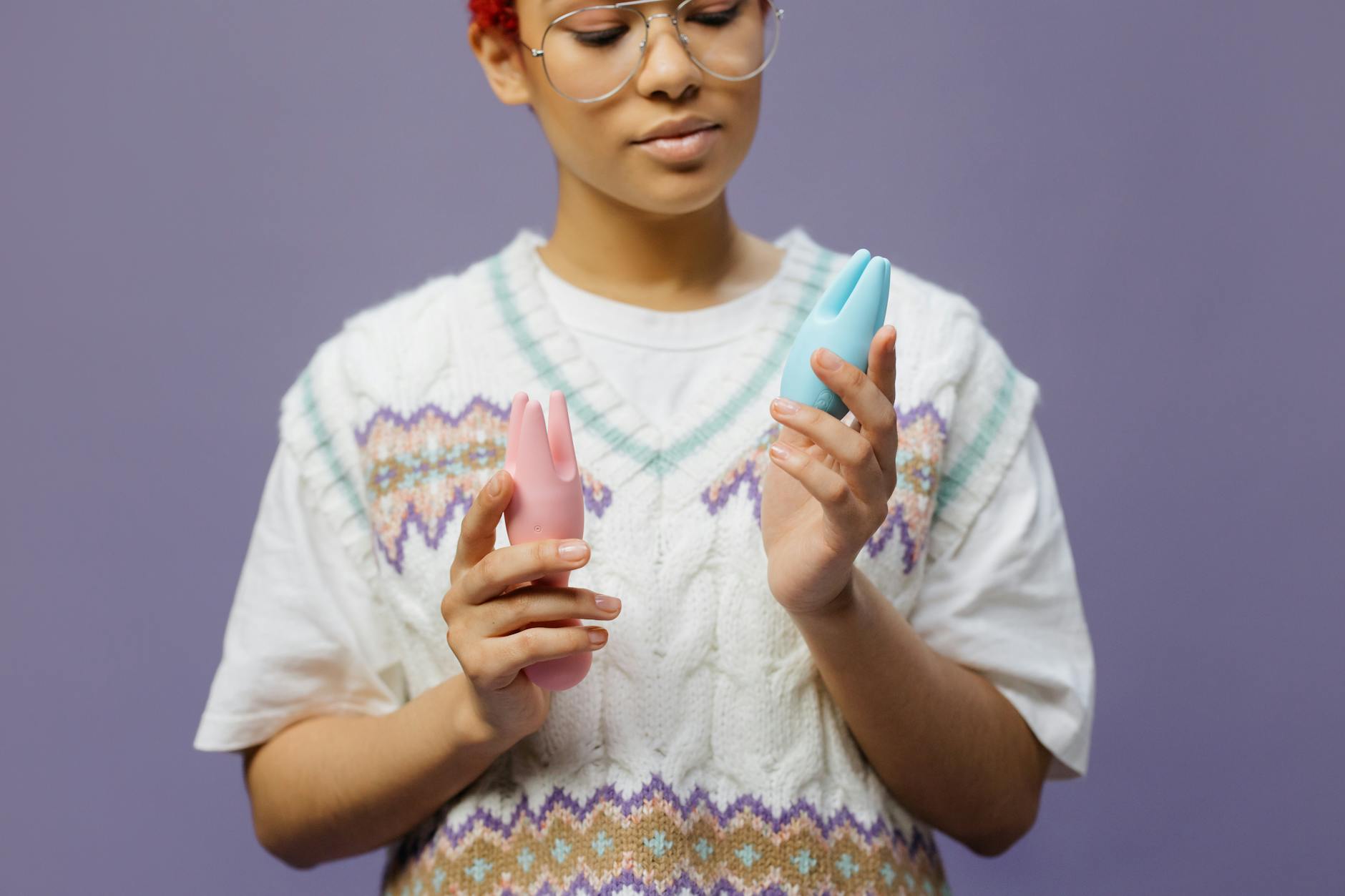
Photo by cottonbro studio on Pexels
Why a lemon vibrator is different
Unlike traditional vibrators, which rely on oscillating frequency, lemon vibrators use suction—a gentle pulsing pressure that mimics oral stimulation without the intensity or friction. This matters because suction activates different nerve pathways than direct vibration does. You're engaging the broader sensory field around the clitoris, not hammering one tiny point.
The consistency is key. A lemon vibrator delivers the same pattern, over and over. Your nervous system can relax into it. There's no guessing, no need to adjust positioning constantly, no worrying about "am I doing this right?" You're just receiving sensation.
For bodies that need time to build arousal, this predictability does something important: it removes friction from the experience. Not physical friction—mental friction. You can stop monitoring whether it's working and start actually feeling.
How to set yourself up for success with a lemon vibrator when sensation builds slowly
Budget the time upfront. This isn't negotiable. If your body needs 20-30 minutes to reach obvious arousal, plan for 30-40 minutes of focused sensation. Cancel the mental pressure to climax by minute 10. Your nervous system will settle faster if you've already decided you have time.
Start in parasympathetic mode. This means genuinely relaxed, not just "not anxious." Take a warm shower. Dim the lights. Put your phone in another room. Some people benefit from 5-10 minutes of deep breathing or a short meditation beforehand. You're signaling to your body: it's safe to feel now.
Begin at a lower intensity setting. With a lemon vibrator, start on setting 1 or 2. Let your tissues and nerves adjust to the sensation before ramping up. Many people are shocked that they don't need intensity to build arousal once they've given their body permission to start early and stay present.
Pair it with intentional touch. Use your hands simultaneously. Touch your breasts, inner thighs, the outside of your genitals. Sensation builds faster when you're engaging multiple zones. Your brain registers "I'm receiving pleasure now," and the nervous system says, "okay, we can relax." That permission is often what slower-building bodies need.
Don't chase a specific outcome. This is the hardest one. But the moment you're thinking "I need to orgasm by X time" or "if this isn't working by now, something's wrong," you've flipped back to sympathetic mode. Some sessions will be about building sensation without reaching climax, and that's valuable data. Your nervous system is learning that pleasure is safe. The orgasm comes after that belief is established.
When arousal is slow because of disconnection
Sometimes slow-building sensation points to something deeper: emotional disconnection from your body or anxiety that suppresses arousal. If you notice that sensation literally doesn't build no matter what you do, or if you feel completely numb despite trying multiple approaches, that's worth exploring separately.
A lemon vibrator is a tool for sensation, not a fix for emotional avoidance. But it can be part of the healing process. The consistency and ease of use means you're not fighting your body while you're also working through mental blocks. That's powerful.
With a partner, here's how to frame it
If you're partnered and your body takes time to warm up, your partner might interpret that as a sign you're not attracted to them or not interested. That's a separate conversation that needs to happen. But practically speaking: using a lemon vibrator solo first isn't a rejection of partnered sex. It's preparation.
When you know from experience that your body takes 25 minutes to shift into arousal, you can tell your partner, "This is just how my nervous system works. Let's plan ahead." Then you're not both lying there frustrated at minute 10. You're working together toward something.
If your partner wants to participate, having a lemon clitoral vibrator in the toolkit means they can apply consistent, competent stimulation while you're building sensation. It removes performance pressure from their hands or mouth, and it means you're getting exactly the kind of input your body responds to. Everyone wins.
The timeline question: how long is normal?
Honestly? Anywhere from 5 minutes to 45 minutes is within normal range. Your body isn't slow because something's broken. It's slow because that's your wiring. Some of the most reliable, intense orgasms come from bodies that need time to build. There's a reason marathon sessions exist—because slow-building bodies often have deeper, longer-lasting pleasure once they get there.
Stop comparing your arousal timeline to porn, to your friends' vague comments, or to some arbitrary standard. Your timeline is your information. A lemon vibrator just means you can work with your actual pace instead of fighting it.
When to bring in professional support
If you've given yourself genuine time and space, tried multiple approaches, and sensation genuinely isn't building even with a tool designed for your nervous system, that's a sign to talk to a sex therapist or counselor. There might be trauma, medication effects, or medical factors at play. But the vast majority of slow-arousal experiences respond beautifully to permission, time, and the right stimulation approach.
A lemon vibrator bridges that gap for so many people. It's not magic. It's just a tool that works with how your body actually functions instead of requiring you to adapt to an arbitrary standard.
Frequently asked questions
How long should I expect to use a lemon vibrator before sensation kicks in?
It varies, but many people report noticing clear sensation shift between 5-15 minutes of consistent use. The key is relaxation, not rushing. If you're watching the clock, you're tensing your nervous system, which slows arousal even more. Set a time goal if it helps, but then let go of it once you start.
Can using a lemon vibrator actually retrain my nervous system to respond faster?
Yes, partially. When you consistently experience arousal building in a parasympathetic state, your body learns that pleasure is accessible. Over time, you might notice sensation responding a little faster, even without the vibrator. But this isn't about becoming "normal." It's about your body learning it's safe to feel. That learning sticks.
Is slow-building sensation a sign something's wrong with my body?
Not at all. It's a sign of how your particular nervous system is wired. Some people are sprinters; others are marathon runners. Neither is broken. A lemon clitoral vibrator just gives marathon-wired bodies an efficient tool instead of forcing them to adapt to sprinter expectations.
What if my partner gets impatient with slow arousal?
That's a relationship conversation, not a you problem. Your body's timeline is valid. If a partner can't give you the time your nervous system needs, that's a compatibility issue. Many partners find that planning ahead and having a clear sensual routine (including a lemon vibrator) actually makes sex better for both of them because the pressure drops.
Can medication or hormones affect how fast sensation builds?
Absolutely. Birth control, antidepressants, and hormonal fluctuations can all slow arousal. If you suspect medication is involved, that's worth discussing with your doctor. But slowed arousal doesn't mean lost pleasure. A lemon vibrator designed for sustained, predictable stimulation works beautifully for medication-affected bodies.
Is there a "normal" amount of time before climax?
There's no normal. Average time varies wildly depending on the person, the day, stress levels, and what you're doing. The pressure to hit some invisible timeline is honestly the biggest killer of pleasure. Your body's pace is your baseline. Work with it, not against it.
The bottom line
Your clitoris doesn't owe anyone speed. Your nervous system doesn't owe anyone intensity on demand. If your body takes time to build sensation, that's information about how you're wired, not evidence that something's broken.
A lemon vibrator gives you a tool that works with that wiring instead of fighting it. Consistent pressure, predictable patterns, and the freedom to approach arousal on your actual timeline. That's the whole point.
If you're struggling with arousal, sensation, or the pressure around both, we're here to help. Reach out and let's talk about what would actually serve your body.