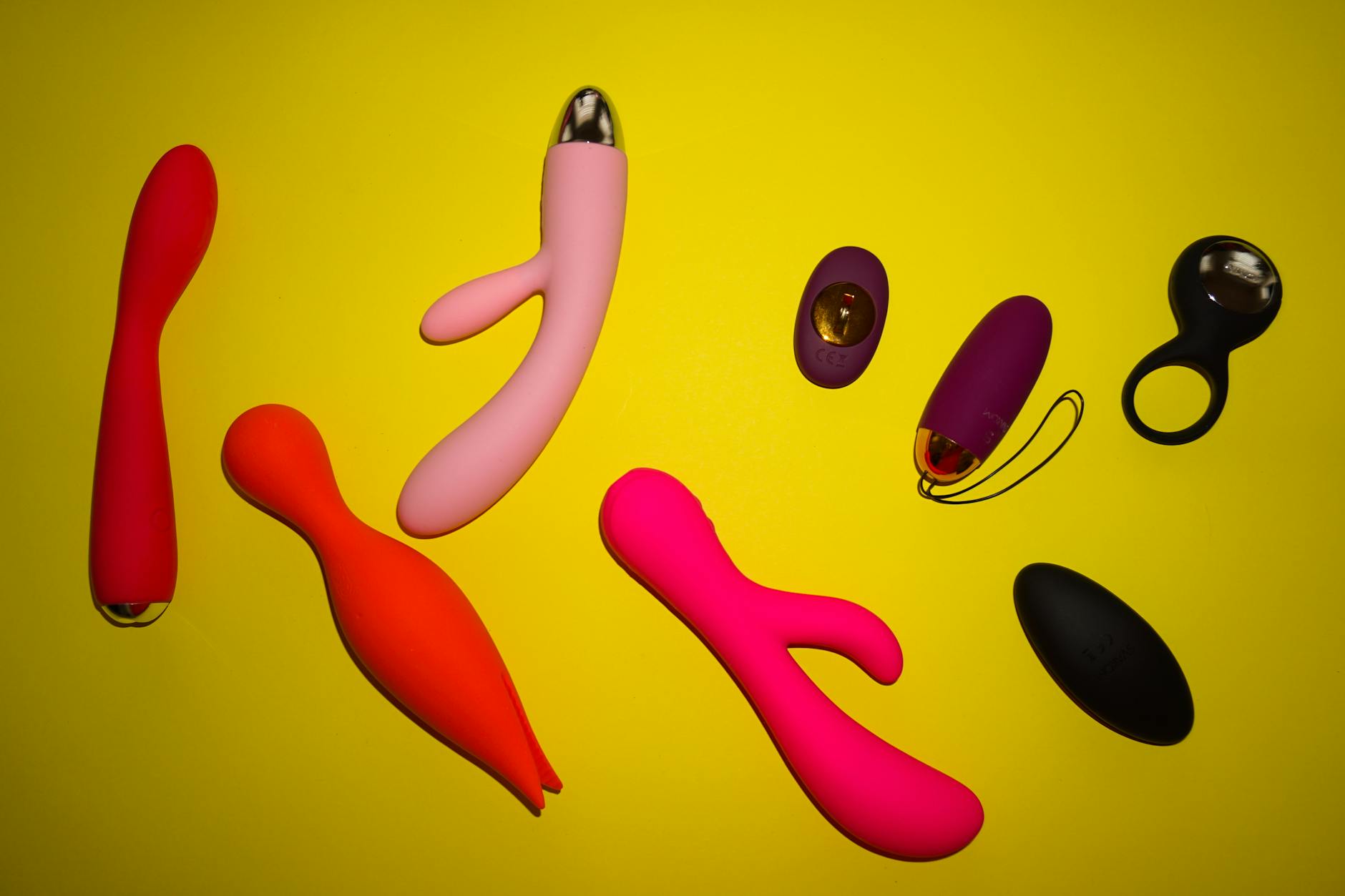
Here's what actually happens when you're both on the same page
Let's be real. Most conversations about pleasure in relationships start from a place of compromise. One person wants more, the other wants less. One person's excited, the other's skeptical. One person initiates, the other responds. But sometimes you get lucky. Sometimes you meet your partner exactly where they are, and they're meeting you exactly where you are. Both excited. Both curious. Both ready to explore together.
That's the scenario we're talking about here. And it changes everything about how you approach using a lemon clitoral vibrator as a couple.
Why mutual enthusiasm changes the game
When both partners genuinely want to be there, the pressure dissolves. You're not negotiating desire. You're not managing expectations or trying to convince anyone that pleasure matters. You're both already convinced. That shared baseline means you can move faster into actual exploration, deeper communication, and real experimentation without the constant undercurrent of "Am I asking too much?"
This isn't just emotional. It's physiological. Anxiety shuts down arousal. Resentment kills it. When you remove those dynamics, bodies respond differently. Arousal comes faster. Sensation feels sharper. Orgasms are often more intense. Your partner's enthusiasm becomes contagious, and you feed each other's excitement in a way that builds rather than negotiates.
Mutual interest also means you can have honest conversations about what you actually want without either person performing or hedging. That honesty is where the real connection happens.
Getting the conversation right before you introduce the toy
Sounds obvious, but most couples skip this step. They buy a lemon vibrator and spring it on the moment, which creates a weird power dynamic even when both people are theoretically on board.
Instead, have the conversation away from the bedroom. Talk about it over coffee or during a walk. Ask your partner directly: What do you imagine? What are you curious about? What are you nervous about? Listen to the answers without planning your response.
Then share your own. Not what you think they want to hear, but what you actually want. The more specific you can be, the better. "I'm curious about how it feels" is less useful than "I want to see you use it on yourself while I watch, and then I want you to use it on me."
This conversation does two things. It gives you actual information about what each person wants. And it sets a tone of collaboration rather than surprise or performance. By the time you actually use the toy, you're not discovering it together in the moment. You've already discovered what each other wants.
How to actually use it together (the practical part)
There's no single "right way," but here are the patterns that work most consistently.
The observation approach. One partner uses the lemon vibrator on themselves while the other watches. This works because it removes the pressure of simultaneous arousal. You can focus on your own sensation while your partner focuses on you. Many people find this deeply erotic because you're not performing for anyone. You're just experiencing, and they're witnessing it. Switch roles after. This is where you learn what your partner actually responds to, and they see what genuinely turns you on rather than what you think should.
The collaborative approach. Your partner uses the lemon vibrator on you, with you directing the rhythm, pressure, and location. Start slow. Not because you're scared, but because sensation builds. Let them feel what happens to your body. Most partners find this incredibly intimate because they're directly causing your pleasure, and they can feel when something clicks. The feedback loop is real.
The combined approach. You use the lemon vibrator while your partner penetrates you (or while you're being intimate in whatever way works for your bodies). This requires a bit of coordination and communication mid-act, which is its own kind of hot. You're building sensation on top of sensation. Start with the vibrator on a lower setting so you're not overstimulated. Build together.
What to actually talk about during
People act like dirty talk needs to sound like porn dialogue. It doesn't. When you're actually connected to your partner, the conversation is usually simpler and more direct.
"Does that feel good?" "Yes, but softer." "Like this?" "Perfect." That's it. That's the conversation. Feedback, adjustment, more feedback. It's not sexy in a fantasy way, but it's incredibly sexy in an actual, real-body, real-preference way.
Some couples add more play to it. "You like watching me react?" "I love it." But again, only if that feels natural to you both. The point is that you're creating feedback loops, not performing a script.
The rhythm and pacing that actually works
Here's what usually happens when mutual enthusiasm meets a new toy. People rush. They crank the lemon vibrator to a high setting immediately because they want to "get to the good part." That's a misread of how sensation works.
Start at pattern 1 or 2 if you're using the Lem or a similar lemon clitoral vibrator. Let your body adjust to the sensation for a few minutes. What feels okay in isolation can feel overwhelming when your nervous system isn't ready. Build from there. Your partner can watch what happens. They'll see when you shift from toleration to genuine pleasure. That moment is worth waiting for.
Arouse first, vibration second. Spend 10-20 minutes on foreplay without the toy. Let your partner touch you. Let yourself get turned on in the traditional way. Then introduce the lemon vibrator. You'll be shocked at the difference.
When to introduce more intensity
Most people think intensity is about settings. Crank it up, get more sensation. But intensity is actually about context. The same vibration pattern feels mild when you're barely aroused and overwhelming when you're close to orgasm.
Start lower than you think you need. Move up when the current setting stops being enough. This usually takes 10-20 minutes. Your partner can watch for the signs. When you start breathing differently, when your hips shift, when your focus narrows. That's when they might ask, "Want me to turn it up?" or you might ask them to.
Some partners love being asked for permission to increase sensation. It creates this dynamic where your partner is actively controlling your pleasure in real time, and you're both collaborating on the pace. It's less about domination and more about attunement.
After the vibrator comes off
Here's what separates couples who use toys once from couples who use them regularly. What you do after matters as much as what you do during.
Don't immediately separate. Stay close. Stay connected. Talk about what just happened. Not the performance analysis ("did you come?"), but the actual experience. "That felt so different when you were watching." "I loved how responsive you were." "I want to try the collaborative thing next time." This is where you build the habit of honest feedback, which makes everything that comes next easier.
The emotional aftermath
When mutual enthusiasm is genuine, the emotional aftermath is usually uncomplicated. You both feel good. You both want to do it again. You both feel closer. Sometimes you'll discover something you didn't expect. One of you might need a day or two to process. That's fine. Say so. Adjust.
The thing about couples who are already aligned on pleasure is that you actually communicate about it because there's no shame or reluctance in the room. You can say, "That was amazing and also I felt a little weird about X." Your partner can hear it because they're not defensive. You can both adjust. This is the real benefit of mutual enthusiasm. You get to iterate together.
Expanding from there
Once you're comfortable with the lemon vibrator, you might explore others. Some couples find that combining different tools creates new sensations. Others realize they want to add partners or try something more specific. The important thing is that you've established a communication pattern that lets you explore without friction.
If you want to dive deeper into how other couples navigate pleasure together, read about how to use a lemon vibrator when rebuilding intimacy with your partner. That post covers couples who are reconnecting after distance or difficulty. The communication principles are similar, though the emotional context is different.
FAQ: When mutual enthusiasm meets real logistics
How long does it actually take to get comfortable using a lemon vibrator together?
It depends on how comfortable you already are with your bodies and with each other. If you're already talking openly about sex, maybe one or two sessions before it feels natural. If this is new territory for both of you, give yourself 3-4 tries. The first time is always a little awkward because you're learning the tool and learning each other's responses simultaneously. By the third time, you usually know what works.
What if one of us is more sensitive than the other?
That's actually an advantage. The person who's more sensitive goes first. You learn their threshold. You see what a lower setting looks like on their body. Then when the other person uses it, you already have a reference point. And honestly, watching your partner discover what makes them respond is half the fun.
Can you use a lemon clitoral vibrator during penetration without it being too intense?
Yes, but you need to communicate about it. Start on a lower setting. Some couples find that the combination is perfect at pattern 1 or 2, but overwhelming at pattern 3. The only way to know is to try and adjust. Also, the angle matters. If you're positioning it directly on the clitoris, it might be too intense during penetration. You might need to angle it slightly differently.
What if your partner wants to use the vibrator but you're nervous?
Honestly, having a partner who's genuinely excited to explore tends to ease that nervousness faster than anything else. But you still get to set the pace. Say, "I want to try it, but I want to start really slow." Your partner can respect that. And when they see your actual response rather than your anxiety, they'll be reassured too.
How do you know if your partner is actually into it or just going along?
You ask. Directly. "Are you genuinely enjoying this, or are you doing this for me?" If they're doing it for you, that's information. You can then decide if you want to keep going or if you want to adjust. But mutual enthusiasm means you're both checking in, not just assuming.
Is it weird to talk about what you want while it's happening?
No. It's actually the opposite of weird. It's normal. Most people in long-term relationships find that the best sex happens when they're giving real-time feedback. Softer, harder, slower, right there, yes keep doing that. That's not awkward. That's how you actually get what you want.
The thing about shared desire
When you and your partner are both genuinely interested in pleasure, toys like the lemon vibrator become collaboration tools rather than negotiation tools. You're not trying to convince anyone that desire matters. You're both already convinced. You're just exploring what that looks like together. That shared baseline changes everything. The communication becomes easier. The intimacy deepens. The pleasure feels better because there's no resentment underneath it.
Start with the conversation. Be specific about what you want. Listen to what your partner wants. Then introduce the tool and let both of you learn together. The rest follows naturally from there.